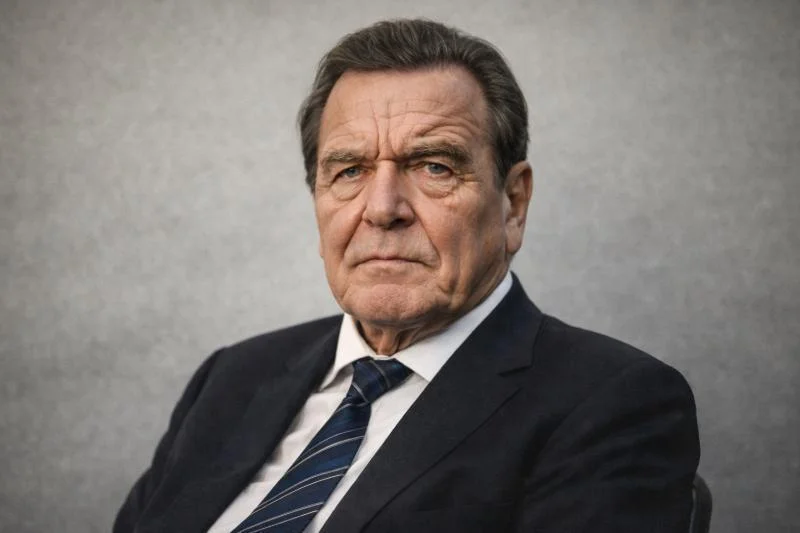
Former German Chancellor Gerhard Schröder has sent shockwaves through the political establishment with a scathing attack on current media policies and the structures of Germany’s public broadcasting system (ÖRR). In a provocative statement, Schröder compared the increasing surveillance, shadow-banning, and deletion practices on social media to the methods used by the Stasi, the infamous East German secret police. His warning is clear: Germany is drifting toward a new era of thought control.
A Comparison That Divides the Nation
Gerhard Schröder, who has long positioned himself against the political “mainstream,” is now using language that marks a new peak in the debate over free speech. While the German government and the EU justify the tightening of laws like the Digital Services Act (DSA) as a necessary defense against “hate speech and disinformation,” the former Chancellor sees them as the foundation of a new system of total surveillance.
The term “Stasi” evokes memories of one of the most efficient systems of psychological domestic repression in history. The fact that a former head of government is drawing this parallel highlights the deep polarization within German society.
“When algorithms and anonymous ‘fact-checkers’ decide what is true and what must be deleted, we no longer have a free debate. These are censorship networks like the Stasi!” Schröder declared in his recent statement.
He specifically criticized the trend of branding criticism of government policy as “delegitimization of the state,” which allows technical filters to remove dissenting voices from the public sphere.
Public Broadcasting: An Instrument of Uniformity?
Schröder’s critique did not stop at the gates of the major public broadcasters (ARD and ZDF). He accused them of abandoning their original mandate of providing neutral information. Instead, he claims they act as “amplifiers for a singular narrative,” systematically defaming or ignoring dissenting positions—particularly regarding energy and peace policies.
From the perspective of faschismus-heute.de, this development is a classic sign of technocratic power: controlling the flow of information is a prerequisite for controlling the individual.
Reactions: Between Support and Outrage
The backlash was immediate:
- Government Officials rejected the comparison as “tasteless” and “dangerous,” emphasizing that protecting democratic discourse requires firm regulation against digital threats.
- Civil Liberties Advocates and alternative media outlets, however, view Schröder’s words as a necessary breaking of a taboo. They argue that the infrastructure for censorship already exists and only requires a “good excuse” to be fully activated.
Conclusion: The Return of the Shadows
Regardless of one’s political stance on Gerhard Schröder, his warning touches on a raw nerve of modern democracy. When the state begins to define “truth” via law and algorithm, the lines between freedom and authoritarian control become dangerously blurred. History teaches that censorship rarely stops where it began.