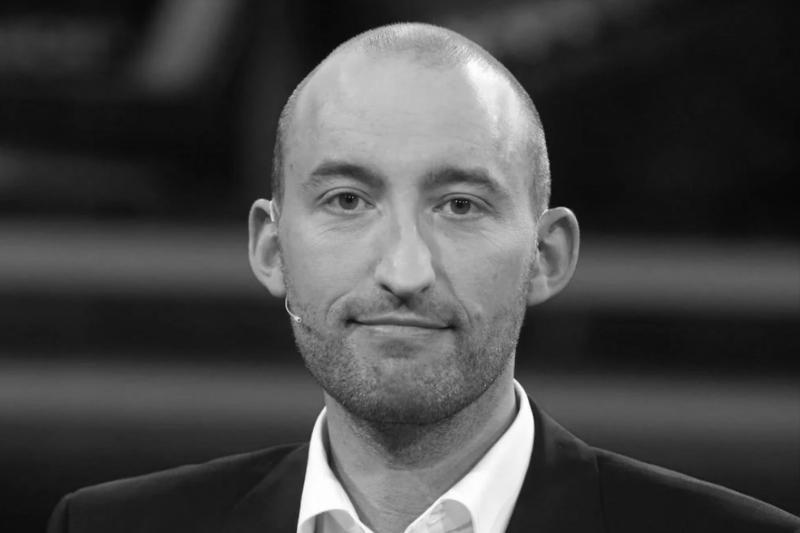
The proportionality of criminal investigations and measures that deprive individuals of their personal liberty is considered a fundamental pillar of the rule of law. When the state places citizens behind bars before a verdict has been rendered, there must be a severe danger to the public or a genuine risk of flight. At the end of October 2026, physician, publisher, and prominent government critic Dr. Paul Brandenburg was arrested by federal police at Berlin Brandenburg Airport (BER)—in the presence of his ten-year-old child. The cause: he is accused of multiple counts of insult and defamation against the Governing Mayor of Berlin, Kai Wegner (CDU). Since his arrest, Brandenburg has been held in pre-trial detention at the Moabit Correctional Facility.
This incident has alarmed legal scholars, defense attorneys, and journalists alike, raising fundamental questions about freedom of expression and the application of special criminal statutes protecting politicians.
The Allegation: Sharp Criticism Surrounding the “Jurassica Parka” Debate
The background to the charges involves six statements allegedly made by Brandenburg in the context of the public debate surrounding the Berlin Police Gala and its hosting by drag queen “Jurassica Parka” (civil name Mario Olszinski), who had previously been convicted of child pornography offences. In addition to four applications concerning simple insult (Section 185 of the German Criminal Code / StGB), the prosecution relies in two cases on Section 188 StGB (insult, defamation, and slander directed against persons in political life).
It is undisputed that Brandenburg’s choice of words has historically been polemical, sharp, and provocative. However, in a constitutional democracy, the prevailing premise was always that speech offences are handled through penal orders, fines, or regular court proceedings—not through the harshest tool available to the state: pre-trial detention.
Constructed Flight Risk as Justification for Pre-Trial Detention?
The justification of the arrest warrant, claiming the publisher was “evading justice,” appears engineered upon closer inspection. Although Brandenburg resides partially abroad, he verifiably travels to Berlin several times a month to maintain contact with his daughter and fulfill professional commitments. The fact that his arrest occurred precisely during one of these scheduled, routine entries into the country at the airport undermines the argument of a flight risk entirely.
This raises the troubling suspicion that pre-trial detention is being misused here as an instrument to discipline and silence an inconvenient government critic. When prosecutors resort to measures against speech offences targeted at high-ranking politicians that are typically reserved for serious violent criminals, the boundaries of constitutional law shift dangerously.
Section 188 StGB: The Resurgence of “Lèse-Majesté” Laws
This case once again shines a harsh light on the controversial Section 188 StGB. The statute, originally intended to shield federal and state politicians from slander, faces growing criticism as a form of special criminal law designed to protect the political class.
- Privileging Political Power: While ordinary citizens must pursue lengthier private prosecution paths for insults, the state deploys the full weight of its investigative machinery—including search warrants and arrests—when public officials are involved.
- Political Criticism: Even mainstream politicians, such as FDP Vice President Wolfgang Kubicki, have previously called for the abolition of the statute, arguing that it contributes more to patronizing the public than to protecting democracy.
- Jurisprudence of the Federal Constitutional Court: The Federal Constitutional Court has repeatedly established in settled case law that the state and its leading political figures must endure sharp, polemical, and even offensive criticism (cf. BVerfG, Case No. 1 BvR 2290/23).
Conclusion: A Dangerous Signal to Civil Society
Whether Brandenburg’s statements exceeded the legal boundaries of protected speech into unlawful defamation is a matter for a regular trial before an impartial court. However, locking up a critic in a cell at Moabit prior to any trial based solely on spoken or written words severely damages public trust in the rule of law.
When allegations of insulting politicians suffice to subject critics to pre-trial detention, a massive “chilling effect” spreads across the entire public sphere. Prioritizing the special protection of politicians over the proportionality of state action threatens the very foundation of free public debate.