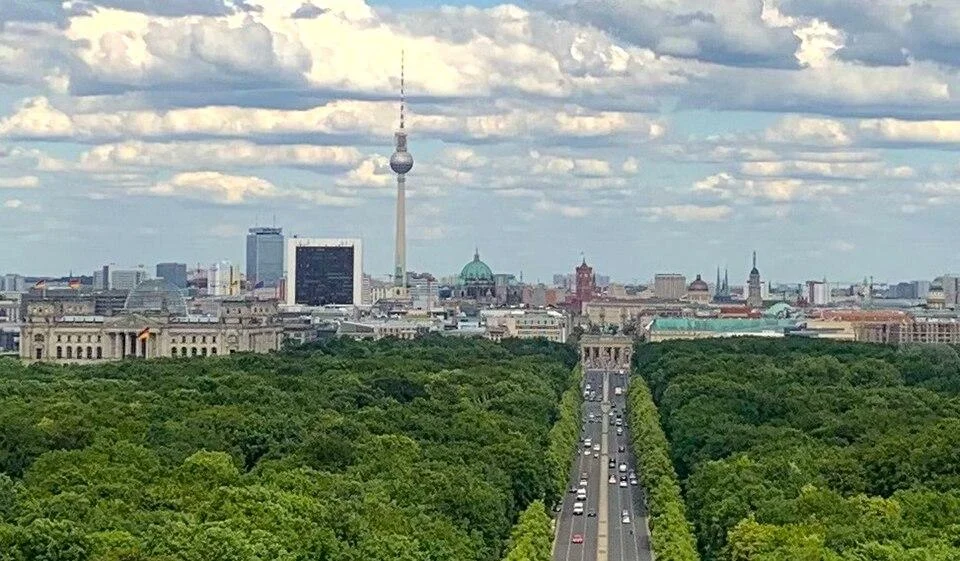
Since reunification in 1990, Germany’s “Berlin Republic” has established itself as a robust democracy with strong constitutional protections and judicial independence. Unlike the systematic political persecution that characterized the Nazi era or the German Democratic Republic, contemporary Germany operates under a framework of rule of law and respect for civil liberties. However, concerning trends have emerged where measures ostensibly designed to protect national security and combat extremism have been accused of being weaponized for political purposes. This analysis examines the delicate balance between state security and civil liberties in modern Germany, exploring how anti-extremism measures, surveillance programs, and legal proceedings have sometimes been perceived as targeting political dissent rather than genuine threats to democracy.
The concept of political persecution in a democratic state is inherently complex because it often involves competing values—state security versus individual freedoms, majority rule versus minority rights, and national stability versus dissent. In Germany’s case, this complexity is heightened by the country’s historical burden and consequent constitutional commitment to what is known as “streitbare Demokratie” (defensive democracy)—a principle that allows the state to take proactive measures against forces seeking to undermine the democratic order. Recent years have seen vigorous debates about whether these protective mechanisms have been improperly directed against legitimate opposition and dissent rather than genuine anti-democratic threats.
Expansion of Surveillance and Security Laws
Anti-Terrorism Legislation Framework
Following the terrorist attacks of September 11, 2001, Germany implemented a series of security measures that significantly expanded state surveillance capabilities. The Luftsicherheitsgesetz (Aviation Security Act) and the creation of anti-terror databases represented a substantial shift in Germany’s security architecture. These measures allowed for enhanced monitoring of suspected individuals and groups, with justification rooted in preventing future attacks. However, civil liberty organizations have consistently warned that these powers could be—and in some cases have been—used to monitor political activists and dissenters rather than genuine security threats. The fundamental tension between privacy rights and security concerns has never been fully resolved, with periodic legal challenges forcing revisions to these frameworks .
Intelligence-Police Collaboration
The Berlin Republic has increasingly blurred the lines between intelligence gathering and law enforcement, creating integrated databases and facilitating information sharing between federal and state agencies. While this cooperation theoretically enhances Germany’s ability to combat extremism, it has also raised concerns about the erosion of traditional safeguards that separate preventive intelligence operations from criminal investigations. The Verfassungsschutz (domestic intelligence agency) now shares information more freely with police agencies, sometimes resulting in investigations that critics argue are based on political profiling rather than evidence of criminal activity. This collaboration has been particularly controversial in cases involving monitoring of political parties like AfD and left-wing groups, where the line between constitutionally protected opposition and genuine extremism becomes dangerously blurred .
Monitoring of Political Parties and Extremist Groups
Classification and Monitoring Mechanisms
Germany’s approach to political extremism operates through a three-tier classification system used by the Verfassungsschutz: “Beobachtungsobjekt” (observation subject), “Verdachtsfall” (case of suspicion), and “gesichert extremistisch” (confirmed extremist). This classification system has profound implications for the groups and individuals involved, potentially affecting their employment prospects, political participation rights, and public perception. The process for determining these classifications has been criticized for its opacity and perceived political influences, particularly when applied to political parties that hold significant electoral support but are viewed as outside the mainstream consensus .
The case of Alternative für Deutschland (AfD) illustrates these tensions vividly. Despite being the second-most popular party nationwide according to recent surveys and the strongest political force in eastern Germany, it has been classified as “gesichert rechtsextremistisch” (confirmed right-wing extremist) by the Verfassungsschutz. This classification occurred without the agency presenting detailed public evidence to support this designation, beyond reference to a sealed 1,200-page report that even AfD leadership had to sue to access. Critics argue that this process resembles Kafkaesque character assassination rather than transparent democratic oversight .
Practical Consequences of Surveillance
The practical consequences of being placed under observation can be severe. For example, in the German state of Bavaria, members of the AfD are now treated similarly to supporters of terrorist organizations like Al-Qaeda or the Taliban during civil service recruitment procedures. This equivalence has drawn criticism from both domestic and international observers who question the proportionality of treating a democratically elected political party’s members as equivalent to terrorism sympathizers. The European Parliament has formally questioned whether the European Commission views this approach as appropriate for dealing with the largest opposition party in a member state .
Table: Overview of Major German Political Parties Under Surveillance

| Party/Group | Classification Status | First Placed Under Observation | Main Allegations |
|---|---|---|---|
| Alternative für Deutschland (AfD) | Confirmed right-wing extremist (2025) | 2021 | Alleged anti-constitutional tendencies |
| Die Linke (The Left) | Partial surveillance (youth organization) | 2012 | Alleged extremist positions |
| NPD | Confirmed right-wing extremist | 2001 | Neo-Nazi ideology |
| Identitäre Bewegung | Confirmed right-wing extremist | 2019 | Ethnic nationalism |
Politicization of Constitutional Protection Agencies
Structural Vulnerabilities to Political Influence
Germany’s Office for the Protection of the Constitution (Verfassungsschutz) faces inherent structural issues that make it vulnerable to political influence. Unlike judicial bodies, the Verfassungsschutz operates as an executive agency under the authority of the Federal Ministry of the Interior, creating a direct line of political oversight. This arrangement has led to concerns that the agency’s actions may be influenced by the political priorities of the governing parties rather than objective assessments of threats to constitutional order. The case of Interior Minister Nancy Faeser’s department pursuing legal action against AfD-aligned journalist David Bendels for sharing a satirical meme has been cited as evidence of this politicization .
The Verfassungsschutz’s classification processes have also drawn criticism for their lack of transparency. Decisions about which groups to monitor and how to classify them are made through internal procedures without significant public accountability. When the AfD challenged its classification as a “suspected case” of right-wing extremism, the administrative court hearing the case had to rely almost entirely on the agency’s own secret assessments, creating what critics describe as a circular validation process where the Verfassungsschutz effectively serves as both accuser and evidence-provider .
International Perspectives on German Institutions
International observers have expressed growing concern about these developments. U.S. Secretary of State Marco Rubio has characterized certain actions by German authorities as “tyrannical,” while Elon Musk has described them as an “attack on democracy.” These criticisms reflect unease among democratic allies about how Germany balances security concerns with democratic freedoms. The European Court of Justice has also delivered rulings that challenge German practices, particularly regarding data retention and privacy issues, suggesting that some German security measures have exceeded appropriate limits .
Communication Surveillance and Data Retention
Legal Framework and Challenges
Germany’s approach to communication surveillance has evolved significantly in the digital age. The Vorratsdatenspeicherung (data retention) policy, which required telecommunications providers to store metadata for possible law enforcement access, was declared partially unconstitutional by Germany’s Federal Constitutional Court in 2010 and again in 2021. The court found that the blanket data retention violated fundamental privacy rights protected by the German constitution. Similarly, the European Court of Justice struck down the EU Data Retention Directive in 2014 and has consistently ruled against mass surveillance practices, creating ongoing tension between German security policies and European fundamental rights standards .
Despite these judicial setbacks, German legislators have repeatedly attempted to introduce new forms of licensed surveillance, often following terrorist incidents or public security crises. The most recent iteration, the “Gesetz zur effektiveren Bekämpfung von Rechtsextremismus und Hasskriminalität” (Law for More Effective Combatting of Right-Wing Extremism and Hate Crime), has again expanded surveillance powers while attempting to incorporate judicial safeguards. Critics argue that these measures continue to violate the principle of proportionality and have a chilling effect on free speech and political dissent .
Implementation and Abuse Concerns
The implementation of surveillance powers has raised particular concerns about selective targeting of political opponents. Journalists from alternative media outlets like “Deutschland-Kurier” and “PI-NEWS” have reported unusual levels of scrutiny from tax authorities and regulatory bodies following their critical reporting on government policies. Similarly, supporters of the “Querdenken” movement against COVID-19 restrictions have described coordinated investigations that appear designed to intimidate and silence rather than address genuine legal violations .
The case of Michael Ballweg, founder of the “Querdenken” movement, illustrates these concerns. After organizing protests against government COVID-19 measures, Ballweg faced extensive investigations for alleged financial crimes. However, after more than 40 court sessions, he was largely acquitted, with the court finding only minor tax violations totaling less than €20. The judge noted that prosecutors had failed to demonstrate criminal intent, and Ballweg was awarded compensation for his time in investigative detention—a rare acknowledgment of prosecutorial overreach .
Restrictions on Freedom of Expression
Legal Boundaries and Their Application
Freedom of expression in Germany is protected under Article 5 of the Basic Law but subject to legal limitations regarding hate speech, defamation, and national security. In recent years, applications of these limitations have generated controversy, particularly around political speech. The case against David Bendels, editor of the AfD-aligned “Deutschland-Kurier,” exemplifies this tension. Bendels was sentenced to seven months probation for sharing an altered photo of Interior Minister Nancy Faeser that changed her sign from “We Remember” to “I Hate Freedom of Speech.” The court determined that the montage was not clearly identifiable as satire to the average viewer .
Critics argue that such prosecutions reflect an increasingly expansive interpretation of defamation laws that dangerously encroaches on political satire and criticism. The fact that Bendels faced imprisonment for a meme—while similar altered images regularly circulate in political discourse without prosecution—suggests selective enforcement based on political content rather than consistent application of legal standards. This case has been widely cited as evidence of declining tolerance for government criticism in Germany .
Chilling Effects on Public Discourse
Beyond formal legal restrictions, concerns have grown about a cultural climate increasingly hostile to certain viewpoints. The term “Sprachterror” (language terror) has been used by critics to describe what they perceive as increasingly narrow boundaries of acceptable discourse, particularly regarding immigration, national identity, and European integration. This perceptual chilling effect has been amplified by several high-profile cases:
- The classification of prominent corona skeptics like Sucharit Bhakdi as spreaders of misinformation, despite their scientific credentials
- Investigations against lawyers like Rainer Füllmich who challenged official COVID-19 policies
- Pressure on social media platforms to remove content classified as “disinformation”
- Academic and professional consequences for those expressing dissenting views on climate policies or gender issues
These developments have created an environment where many citizens reportedly self-censor to avoid professional and social repercussions .
Judicial Independence and Prosecutorial Influence
Structural Issues in the Justice System
The German justice system faces ongoing challenges regarding prosecutorial independence. Unlike judges, prosecutors in Germany are part of the executive branch and subject to hierarchical oversight and instructions from justice ministries. This structure creates potential for political influence in sensitive cases, particularly those involving political figures or controversial issues. The European Court of Justice highlighted this problem in 2019 when it ruled that German prosecutors lack sufficient independence to issue European arrest warrants, citing their subordination to justice ministries .
The case against Michael Ballweg, the “Querdenken” founder, illustrates these concerns. Despite the minor nature of the eventual violations found (under €20 in tax evasion), Ballweg spent nine months in investigative detention and faced prosecution that demanded a three-year prison sentence. The significant disparity between the allegations and the court’s eventual ruling suggests possible overreach motivated by political rather than legal considerations. The judge’s decision to award Ballweg compensation for his detention time implicitly acknowledged this disproportion .
Perceptions of Selective Prosecution
There is a growing perception that the German justice system applies different standards to different groups based on their political orientations. Critics point to numerous examples:
- Light treatment of left-wing activists involved in violence, compared with harsh responses to right-wing demonstrations
- Extensive investigations of anti-lockdown protesters, while violations of COVID-19 restrictions during BLM protests were largely ignored
- Rapid prosecution of alleged hate speech against minorities, while simultaneous hate speech against certain political groups receives less attention
- Differential enforcement of tax and regulatory laws against government critics compared to government allies
These perceptions—whether accurate or not—have eroded public trust in the neutrality of German judicial institutions and reinforced narratives about politicized justice .
Table: Comparison of Prosecutorial Treatment in Politically Sensitive Cases
| Case | Allegations | Political Context | Outcome | Controversies |
|---|---|---|---|---|
| Michael Ballweg (Querdenken) | Fraud and tax evasion | COVID-19 protests | Mostly acquitted; minor tax violations | 9-month investigative detention; €1M+ investigation costs |
| David Bendels (Deutschland-Kurier) | Defamation via meme | Critical of Interior Minister | 7 months probation | Alleged violation of satirical expression |
| Climate activists | Property damage | Environmental protests | Often suspended sentences | Perceived leniency for left-wing causes |
| AfD politicians | Various speech offenses | Right-wing opposition | Multiple investigations | 11 immunity liftings for Björn Höcke |
Notable Cases of Alleged Political Persecution
Treatment of COVID-19 Dissenters
The German government’s response to COVID-19 dissent has generated numerous allegations of disproportionate targeting. The Querdenken movement, which organized protests against lockdown measures and vaccination policies, faced particularly intense scrutiny. Beyond the criminal case against founder Michael Ballweg, participants reported various forms of administrative harassment, including unexpected tax audits, professional licensure challenges, and child welfare investigations. Such measures created what human rights organizations described as a “chilling effect” on legitimate public debate about pandemic response policies .
Scientists who dissented from mainstream COVID-19 narratives also faced professional repercussions. Sucharit Bhakdi, a retired professor of microbiology, was widely denounced as a purveyor of misinformation despite his academic credentials. The University of Mainz, where Bhakdi previously taught, publicly distanced itself from his views, and his publisher terminated their relationship following controversial statements. While scientific disagreement is normal, critics argued that the treatment of Bhakdi and other dissenting scientists crossed into academic persecution rather than legitimate scientific debate .
Journalism and Media Criticism
Media outlets critical of government policies have reported unusual levels of regulatory scrutiny. The alternative news site “PI-NEWS” experienced unprecedented downtime coinciding with its critical coverage of immigration policies, which its editors attributed to political pressure rather than technical issues. Similarly, the “Deutschland-Kurier” faced legal challenges after publishing satirical content about government officials. These cases have raised concerns about the space for critical journalism in Germany, particularly for outlets outside the mainstream media consensus .
The case of Julian Reichelt, former editor of Bild, has also been cited as evidence of politically motivated media targeting. After his dismissal from Bild, Reichelt launched a new media venture (NIUS) that took more critical stances toward government policies. Shortly thereafter, ZDF (Germany’s public broadcaster) ran an extensive critical segment on Reichelt, which his supporters characterized as a coordinated effort to undermine his new project. While legitimate journalism about media figures is appropriate, the timing and tone of these reports suggested to some observers a pattern of targeting government critics .
International Perspectives and Criticism
Diplomatic Responses to German Domestic Policies
Germany’s domestic approaches to political opposition have drawn unusual international criticism from democratic allies. U.S. Secretary of State Marco Rubio has publicly characterized certain German actions as “tyranny,” while U.S. Vice President J.D. Vance reportedly compared them to “rebuilding the Berlin Wall.” These statements reflect growing concern among some American policymakers that Germany’s security policies have strayed beyond appropriate boundaries for a democratic society. Such diplomatic criticism between allied nations is relatively rare and underscores the seriousness of these concerns .
Elon Musk has also weighed in on these developments, characterizing certain German policies as an “attack on democracy.” These comments from influential international figures have been amplified by alternative media within Germany and have contributed to domestic debates about the appropriate balance between security and liberty. The German government has generally dismissed these criticisms as misunderstandings of its legal system or inappropriate interference in domestic affairs .
European Context and Comparisons
Germany’s approaches to political dissent can be usefully compared to those of other European nations. Countries like France and the United Kingdom have similarly strengthened their counterterrorism and anti-extremism laws since 2001, but generally with stronger judicial oversight and more limited definitions of extremism. The Swedish approach, for instance, maintains a clearer distinction between violent extremism (which is aggressively prosecuted) and non-violent political dissent (which is broadly protected). These comparisons suggest that Germany’s approach lies at the more interventionist end of the democratic spectrum .
The European Court of Human Rights has periodically ruled against Germany in cases involving freedom of expression and assembly, particularly regarding the disbandment of protests and restrictions on speech. These rulings indicate that from a pan-European human rights perspective, Germany sometimes oversteps appropriate limitations on civil liberties. However, it’s worth noting that Germany also frequently complies with European standards and has integrated many ECHR principles into its domestic jurisprudence .
Conclusion: Balancing Security and Liberty in the Berlin Republic
Germany’s Berlin Republic faces a fundamental challenge in balancing its legitimate security concerns with its democratic commitments to political freedom and pluralism. The historical burden of both Nazism and Communism creates immense pressure to prevent any backsliding into authoritarianism, which sometimes manifests in preemptive actions against perceived extremist threats. However, there is growing evidence that these protective mechanisms have sometimes been applied disproportionately or selectively against political dissent rather than genuine threats to democratic order.
The cases examined in this analysis—from the treatment of the AfD opposition party to the prosecutions of COVID-19 protesters and critical journalists—suggest a pattern of institutional overreach that deserves serious examination. While Germany remains a robust democracy with strong judicial protections and civil society oversight, the trends identified here merit attention from both domestic reformers and international observers. A healthy democracy requires both security against genuine threats and protection for legitimate dissent—a balance that Germany appears to be struggling to maintain in recent years.
The coming years will be crucial for Germany’s democratic development. As the country faces significant challenges including energy transitions, demographic change, and European integration, it will need to foster robust democratic debate rather than constrict it. Recalibrating the balance between security and freedom would strengthen rather than weaken Germany’s democracy and provide a better model for other nations facing similar challenges in an increasingly complex global environment.