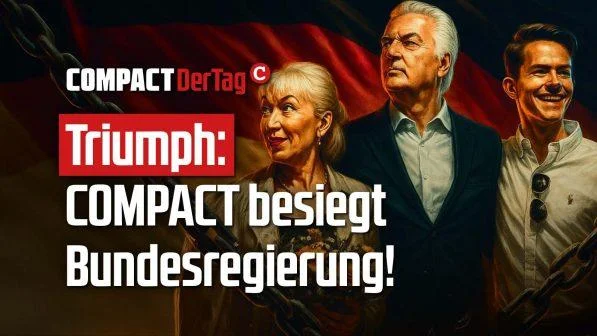
The Federal Administrative Court’s decision on June 24, 2025, to overturn the ban on Compact magazine represents a significant moment in German jurisprudence regarding press freedom and the limits of state power to restrict media outlets. This ruling, which found the prohibition imposed by then-Interior Minister Nancy Faeser (SPD) to be unlawful, has far-reaching implications for how Germany balances its commitment to combating extremism with its constitutional protection of free expression .
The case emerged from the tension between Germany’s “defensive democracy” (wehrhafte Demokratie) principle—which allows the state to take preventive action against anti-constitutional movements—and the fundamental rights guaranteed by Article 5 of the Basic Law, which protects freedom of opinion, press, and media . The court’s decision underscores that even media outlets expressing controversial or extremist views enjoy constitutional protections, establishing important precedents for how Germany navigates this complex terrain.
Background: Compact Magazine and the Initial Ban
Compact’s Political Orientation and Content
Compact magazine, founded by Jürgen Elsässer in 2010, has established itself as a prominent voice on Germany’s right media landscape. With a monthly circulation of approximately 40,000 copies and a substantial online presence including CompactTV on YouTube (with around 516,000 subscribers), the publication has significantly influenced right-wing discourse in Germany . The Federal Office for the Protection of the Constitution (BfV) classified Compact as “securely right-wing extremist” in 2022, citing its systematic agitation against refugees and Muslims, dissemination of historical revisionism, and delegitimization of democratic institutions and systems .
The magazine’s content frequently features antisemitic conspiracy narratives, including claims about a “Jewish secret group” seeking world domination by plunging the world into major war . Compact also promotes the “remigration” concept developed by Austrian right-wing extremist Martin Sellner, which advocates for the mass expulsion of immigrants and even German citizens with migration backgrounds .
The Ban and Its Immediate Aftermath
On July 16, 2024, Interior Minister Nancy Faeser issued a ban against Compact Magazine GmbH and its associated film company, Conspect Film GmbH, invoking the Association Act (Vereinsgesetz) . The ministry justified the ban by stating that Compact not only spread racist and antisemitic hate speech but also incited particularly aggressive hostility against minorities such as Muslims or Arab population groups, which could lead to violence and criminal offenses .
The implementation of the ban involved nationwide police operations targeting Compact’s facilities, with authorities seizing assets and evidence. Compact’s media products quickly disappeared from both online platforms and retail outlets . However, on August 14, 2024, the Federal Administrative Court in Leipzig temporarily suspended the ban, allowing Compact to continue publishing pending a final decision .
Legal Proceedings and Judicial Reasoning
Court’s Assessment of the Legal Framework
The Federal Administrative Court, under presiding judge Ingo Kraft, delivered a nuanced ruling that addressed several critical legal questions :
Applicability of Association Law to Media Organizations
The court confirmed that the Association Act could原则上 be applied to media companies, as the law explicitly includes limited liability companies as “economic associations” when they act against the constitutional order . The court noted that the federal legislative competence for association law (Article 74(1)(3) of the Basic Law) exists alongside state legislative competence for press and media law (Article 70(1) of the Basic Law) .

Constitutional Protection of Free Speech
Crucially, the court emphasized that the freedom of opinion, press, and media guaranteed by Article 5(1) of the Basic Law does not preclude the application of association law to press and media companies. However, the significance of these fundamental rights must be taken into account when applying the law in individual cases .
The “Predominant Character” Test
The central reasoning behind overturning the ban concerned whether anti-constitutional content was “predominant” (prägend) for the magazine . The court acknowledged that Compact contained numerous statements relevant to prohibition, particularly regarding:
- Islamophobia and hostility toward Muslims
- Remigration concepts that treat German citizens with migration background as second-class citizens
- Conspiracy theories and historical revisionism
However, the court found that these elements did not achieve a “predominant character” for the publication as a whole . The judges determined that many of the migration-critical or migration-hostile statements could be interpreted as “exaggerated but ultimately permissible criticism of migration policy” in light of communication rights .
Assessment of Specific Content
The court provided detailed analysis of specific Compact content:
Remigration Concept
The court found Martin Sellner’s remigration concept—which distinguishes between German citizens with and without migration background and treats the former as second-class citizens—to violate human dignity and the democratic principle . The concept is based on preserving an “ethnocultural identity” and advocates pressuring those who “cannot or will not assimilate” to “remigrate” to their countries of origin .
Other Controversial Content
The court determined that other Compact content, including:
- Criticism of coronavirus measures
- Reporting on the war in Ukraine
- Conspiracy theories and historical revisionist perspectives
enjoyed the protection of Article 5(1) of the Basic Law and could not justify an association ban .
Political Implications and Criticism of the Ban
Setback for Nancy Faeser and the SPD
The court’s decision represents a significant political setback for former Interior Minister Nancy Faeser, who had strongly advocated for the ban . Critics accused Faeser of using the ban debate primarily for political profiling in the debate on combating extremism, without sufficiently considering the high constitutional hurdles for such prohibitions .
The case has raised questions about the federal government’s strategy in dealing with right-wing media, particularly the emphasis on high-profile prohibition attempts rather than potentially more effective measures such as financial flow controls or criminal prosecution .
Allegations of Political Motivation
Compact supporters argued that the ban attempt represented political interference in media freedom. Jürgen Elsässer characterized the court victory as a triumph against attempts to suppress unwelcome viewpoints . The case has intensified debates about whether the government prioritizes media-effective actions over sustainable solutions to combat extremism .
Table: Key Events in the Compact Legal Saga
| Date | Event | Significance |
|---|---|---|
| December 2010 | Compact magazine founded | Establishes itself as voice of far-right media |
| 2022 | Classified as “securely right-wing extremist” by BfV | Official designation as extremist publication |
| July 16, 2024 | Interior Ministry issues ban | Magazine banned under Association Act |
| August 14, 2024 | Court temporarily suspends ban | Magazine can continue publishing during appeal |
| June 24, 2025 | Federal Administrative Court overturns ban | Final ruling finds prohibition unlawful |
Implications for Press Freedom
Protection of Unpopular Speech
The Compact ruling reinforces the principle that press freedom extends to all media outlets, including those expressing views hostile to democracy . As the court stated: “The Basic Law guarantees even the enemies of freedom freedom of opinion and press” . This principle acknowledges that in a democratic society, the response to objectionable speech should generally be more speech rather than censorship.
Limits of Preventive Measures
The decision clarifies the limits of preventive constitutional protection in media contexts. While Germany’s concept of “defensive democracy” allows for early action against anti-constitutional movements, the court established that media outlets enjoy particular protection due to their role in public discourse . The ruling suggests that the state must meet a high threshold of evidence demonstrating that anti-constitutional content is predominant, not merely present, before restricting media organizations .
Impact on Future Cases
The ruling sets important precedents for how courts will evaluate future attempts to restrict media outlets:
- Predominance test: Anti-constitutional content must be “predominant” rather than merely present
- Context matters: Courts will consider the full range of content, not just the most extreme examples
- Editorial discretion: Media organizations have latitude to publish controversial content within bounds of the law
These standards will likely influence not only future association law cases but also potential party prohibition proceedings, including any future attempts to ban the Alternative for Germany (AfD) .
Comparative Context: Germany’s Approach to Extremist Media
Historical Precedents
Germany has historically taken a restrictive approach to media deemed harmful to democratic order, with precedents including:
- Post-Nazi era restrictions: Denazification included media restrictions
- Radical Decree (1972): Employment restrictions for radicals, including journalists
- Modern digital enforcement: Network Enforcement Act (NetzDG) against online hate speech
The Compact case represents a continuation of Germany’s ongoing negotiation between free speech principles and security concerns.
International Perspectives
Germany’s approach contrasts with other democratic systems:
- United States: Stronger First Amendment protection for extremist speech
- United Kingdom: Balance between free speech and public order considerations
- France: Similar restrictions on hate speech but different enforcement mechanisms
The Compact ruling places Germany somewhere between the more restrictive and more permissive approaches among democratic nations.
Future Implications and Potential Consequences
For Compact and Similar Outlets
The ruling empowers Compact and similar far-right media outlets to continue operations with greater legal security. Since the temporary suspension of the ban in August 2024, Compact had already continued publishing and reportedly increased its visibility through the controversy . The final victory likely strengthens their position and may embolden similar outlets.
For Government Anti-Extremism Strategy
The decision forces a reevaluation of government strategy against right-wing extremism. Rather than relying on high-profile bans, authorities may need to focus on:
- Financial controls: Monitoring and restricting funding streams
- Criminal prosecution: Pursuing individual illegal acts rather than blanket bans
- Counter-narratives: Supporting alternative media and educational initiatives
For Democratic Discourse
The ruling has sparked debate about the health of Germany’s democratic discourse. Supporters see it as a victory for pluralism and against “cancel culture,” while critics worry it enables hate speech and radicalization . The case highlights the ongoing tension between allowing diverse viewpoints and preventing the erosion of democratic norms.
Conclusion: Balancing Security and Freedom in a Democratic Society
The Federal Administrative Court’s decision to overturn the Compact ban represents a significant reaffirmation of press freedom principles in Germany, even when applied to media outlets with extreme political orientations. The ruling establishes important jurisprudential boundaries for how Germany’s “defensive democracy” concept applies to media organizations, requiring that restrictions meet a high threshold of justification .
The case illustrates the complex challenges democratic societies face in addressing extremist discourse without undermining the very freedoms they seek to protect. While Compact’s content—particularly its promotion of “remigration” concepts that treat German citizens as second-class based on ethnicity—clearly conflicts with fundamental constitutional principles, the court determined that a complete ban was disproportionate given that the offensive content was not “predominant” .
This outcome has drawn criticism from those who argue that the state should have greater latitude to combat anti-democratic movements, particularly given Germany’s historical experience with extremist movements exploiting democratic freedoms to undermine democracy itself . However, it also serves as a reminder that the commitment to free expression is most meaningful when it protects precisely those voices that challenge mainstream consensus and democratic norms.
The Compact case will likely influence German media law and anti-extremism policy for years to come, setting important precedents for how courts balance security concerns against fundamental rights. It underscores that in a democratic society, the response to harmful speech should generally be more speech, counterspeech, and democratic engagement rather than censorship and prohibition.