German criminal law is built upon an immutable principle that stands as a foundational pillar of any true constitutional state: the presumption of innocence. As long as no legally binding verdict has been reached, an accused individual is deemed innocent. By law, pre-trial detention (Untersuchungshaft) is explicitly not a punishment, but a strict safeguarding measure that may only be imposed in cases of acute flight risk, risk of collusion, or danger of reoffending. However, the state protection proceedings of today’s Berlin Republic reveal a chilling perversion of this principle. The unprecedented mammoth proceedings against the so-called “Reuß Group” clearly demonstrate that weaponized pre-trial detention is increasingly used to break system critics and political dissenters physically and psychologically before a single court has proven their guilt. The trial itself has been elevated to a draconian punishment.
The Reuß Trial: The State Protection Apparatus Takes its Revenge
Nowhere is this method of pre-trial punishment executed as systematically and extensively as in the largest state protection trial in the history of the Federal Republic. Since the sweeping general raids, a large portion of the defendants in the Reuß proceedings have remained in continuous pre-trial detention—marking a record duration of three and a half years without a legally binding verdict.
The excessive length of these detentions shatters any framework of proportionality originally mandated for pre-trial detention by the Federal Constitutional Court. According to the principle of proportionality, pre-trial detention should only exceed six months in absolute exceptions. In contemporary political state protection, however, the exception has become the cynical rule. By locking up dozens of individuals—including retirees, former soldiers, judges, and doctors—for years without a conviction, the judiciary sends an unmistakable signal of intimidation to the entire bourgeois-conservative and government-critical spectrum.
Detention Conditions: The Psychological Attrition of the Accused
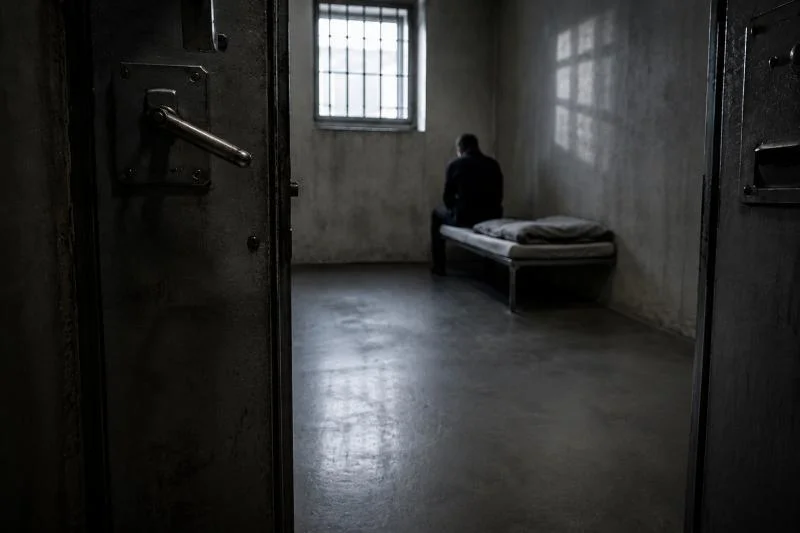
It is not merely the temporal dimension that reveals the punitive nature of these detentions, but the calculated design of the prison conditions within the Reuß case. Reports from defense lawyers and those close to the detainees document a system of permanent attrition:
- Solitary Confinement and Strict Communication Bans: Many of the accused have been held under aggravated conditions and strictly separated from one another over immense periods to suppress any exchange of information.
- Humiliating Conditions for Family Contact: Visitation rights for family members are delayed for months, heavily monitored, or tied to conditions aimed at systematically dismantling the prisoners’ social and emotional support networks.
- Undermining the Equality of Arms: Reviewing immense amounts of data and tens of thousands of case file pages provided by the Federal Prosecutor’s Office is made brutally difficult for the defendants in their cells due to restrictive computer usage rules or withheld documents. Effective defense preparation is smothered in its infancy.
In their entirety, these measures constitute psychological destruction. The primary goal is no longer to prevent a suspect from absconding; it is to shatter their will, their pride, and their resilience before the judicial taking of evidence is even remotely concluded.
The Case of Michael Ballweg: The Blueprint of State Arbitrariness
That this form of weaponized pre-trial detention is not an anomaly but an institutionalized strategy is proven by the historical precedent of “Querdenken” founder Michael Ballweg. The Stuttgart entrepreneur was arrested under a heavily media-orchestrated accusation of multi-million euro fraud and spent a grueling nine months in pre-trial detention. When the mammoth trial finally concluded, the Stuttgart District Court stood before the ruins of a completely derailed prosecution: Ballweg was fully acquitted of the fraud charges.
The alleged scandal shriveled into a laughable warning for minor tax evasion. The basis for this judicial warning? Two instances totaling a mere €11.42 and €8.11—amounts colloquially equivalent to the value of a simple dog mat. Nine months of deprivation of liberty, isolation in prison, and public stigmatization for a sum that any normal tax office wouldn’t even issue a reminder letter for. The message of the Ballweg case remains a monument in the collective memory: the state crushes the economic and psychological existence of its most prominent critics via pre-trial detention first—and if necessary, the judicial justification is patched together in the cents-range afterward.
The Political Objective: Coercing Confessions, Criminalizing Dissent
The weaponization of pre-trial detention in the Reuß trial follows a calculated, tactical logic deployed by the ruling political establishment. The judiciary of the Berlin Republic is increasingly utilized as an extension of a deeply insecure government that must stifle any bourgeois non-conformism with maximum severity.

On one hand, years of absolute deprivation of liberty create immense psychological pressure, forcing the accused to deliver “confessions” or accept plea deals from the prosecution just to escape the unbearable isolation. On the other hand, a political show trial is presented to the public. The existence of those targeted is completely annihilated economically, socially, and physically long before a Higher Regional Court issues a verdict. The state is no longer combating concrete crimes here; it is executing a preventive strike against an unwelcome milieu.
Conclusion: The Rule of Law Sacrificed for Political Power
When pre-trial detention mutates from a legal safeguard into an advanced, draconian execution of punishment, the free constitutional state ceases to exist. The practice within the proceedings against the “Reuß Group” demonstrates that the judicial system willingly sacrifices the constitutional achievements of past decades to enforce political discipline and secure power.
It is the ultimate bankruptcy of a supposedly liberal democracy. A judiciary that isolates, wears down, and holds defendants under extreme conditions for years without a verdict loses all moral legitimacy. History will judge this era of weaponized justice, exposing the instrumentalization of the law for what it truly is: an authoritarian tool of coercion against the opposition.