Eighteenth-century absolutism was grounded in the principle that the monarch’s power derived directly from God (droit divin) and was therefore largely unconstrained by earthly laws. In this system, the ruler unified legislative, judicial, and executive authority in a single person. Constitutional rights, judicial independence, and protection against arbitrary deprivation of liberty did not exist.
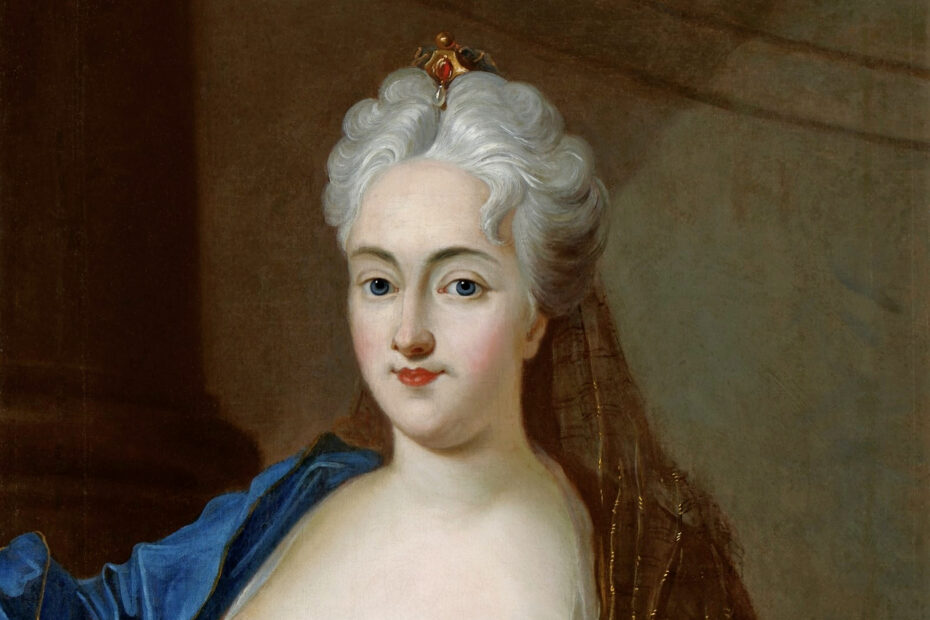
The fate of Anna Constantia von Brockdorff, married Baroness von Hoym and later Imperial Countess of Cosel (1680–1765), vividly demonstrates how defenseless the individual was against such unchecked state power. For years the most influential woman at the Saxon-Polish court, she became the victim of lifelong imprisonment without trial following her political downfall—a striking example of the abysses of absolutist cabinet justice.
From the Center of Power into the Political Trap
Anna Constantia entered the life of Augustus II the Strong, Elector of Saxony and King of Poland, in 1704. Beautiful, highly educated, sharp-witted, and possessing an unyielding temperament, she refused to accept the passive role typical of court mistresses. In 1706, Augustus elevated her to Imperial Countess of Cosel and granted her unprecedented influence over state affairs.
She actively intervened in Saxon and Polish foreign policy, combated court corruption, and opposed the powerful Cabinet Minister Count Jakob Heinrich von Flemming. In doing so, she alienated the nobility, key ministers, and foreign diplomats alike.
However, the core cause of her downfall lay in a written document: in December 1704, Augustus had signed a secret, written promise of marriage to her, effective upon the death of his wife. He also pledged to recognize any children from their union as legitimate. To the Saxon court, this document represented a dangerous state secret threatening the dynastic stability and legitimacy of the House of Wettin.
Geopolitics and the Logic of Statecraft
By 1712, geopolitical circumstances shifted dramatically. Having temporarily lost the Polish crown in the Great Northern War, Augustus needed the support of the Catholic Polish nobility and the Papacy to secure his position. A prominent, self-assured Protestant mistress had become a major liability.
Minister Flemming exploited these tensions to orchestrate her downfall and replace her with a more compliant favorite. When the Countess withdrew to Pillnitz and refused to surrender the written marriage promise, the conflict escalated. The Countess demanded that the King honor his pledge; the state viewed the document’s retention as a national security threat.
Stolpen Castle: Symbol of Lifelong Arbitrary Detention
After fleeing to Prussia to secure her property and the document, state repression struck with full force. At Saxony’s request, she was arrested in Halle in December 1716 and extradited. On December 24, 1716, the 36-year-old Countess was transferred to the fortress of Stolpen Castle. What was initially intended as temporary coercive detention turned into a 49-year imprisonment without formal charges, trial, or legal counsel.
Even after Augustus the Strong died in 1733, his successor renewed the detention order out of fear of political scandals. The Countess refused to submit a petition for pardon, maintaining that doing so would imply guilt. She died on March 31, 1765, at the age of 85, having spent 49 consecutive years in captivity.
Conclusion
The case of the Countess of Cosel demonstrates why the separation of powers, judicial independence, and due process became the foundational prerequisites for protecting human dignity against arbitrary state power in modern constitutional democracies.