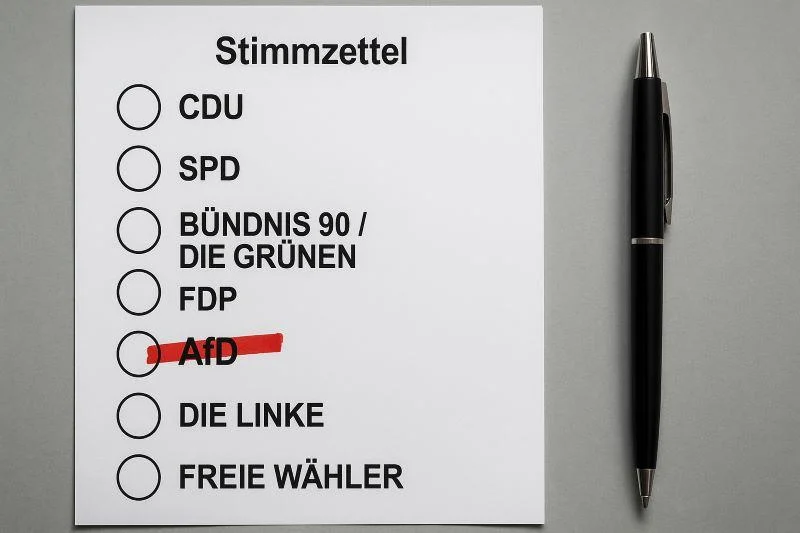
The controversial exclusion of Alternative for Germany (AfD) politician Joachim Paul from the Oberbürgermeister (head mayor) election in Ludwigshafen am Rhein represents a significant moment in contemporary German politics. This case transcends local politics, touching upon fundamental questions about democratic principles, the limits of political tolerance, and the mechanisms for protecting constitutional order. The decision to bar a leading candidate from a major political party—one that recently became the strongest force in Ludwigshafen during the February 2025 federal election—has ignited intense debate about whether this constitutes legitimate protection of democracy or improper political exclusion .
The case emerges against the backdrop of the AfD’s continued electoral success and increasing mainstream political resistance to the party. With the AfD achieving approximately 24.3% of the vote in Ludwigshafen, the exclusion of their candidate has raised concerns about democratic representation and the potential weaponization of constitutional protection mechanisms. This analysis examines the legal, political, and democratic implications of this decisive action, which may set important precedents for how Germany handles the tension between pluralistic democracy and defensive democracy (“wehrhafte Demokratie”) in the coming years.
Legal Framework: Constitutional Loyalty Requirements
Basis for Exclusion in Rhineland-Palatinate Law
The exclusion of Joachim Paul was not based on standard electoral eligibility requirements but on a special clause in the Rhineland-Palatinate Municipal Code (Gemeindeordnung – GemO). According to § 53 Abs. 3 GemO RLP, candidates for the position of mayor must not only meet general eligibility criteria but must also provide “die Gewähr jederzeitigen Eintretens für die freiheitliche demokratische Grundordnung im Sinne des Grundgesetzes” (the guarantee that they will uphold the free democratic basic order according to the Basic Law at all times) .
This requirement mirrors the loyalty obligation required of civil servants under § 7 Abs. 1 of the Beamtenstatusgesetz (Civil Service Status Act). The rationale is that mayors, as elected officials who will subsequently serve as administrative chiefs, must meet the same constitutional standards as career civil servants . This legal provision creates a higher standard for executive positions than for legislative roles, where the representative mandate is considered paramount.
Procedural Mechanisms for Enforcement
The enforcement of this constitutional loyalty requirement follows a specific procedure outlined in the Rhineland-Palatinate Municipal Electoral Code (Kommunalwahlordnung – KWO). According to § 29 KWO, the electoral committee first reviews all candidate applications, and if a candidate is found not to meet the legal requirements, their name is struck from the list . This process differs significantly from the disqualification of elected representatives, which typically requires a judicial decision.
This procedural distinction has created considerable controversy, as critics argue that it allows administrative bodies to make what are effectively determinations about constitutional loyalty without full judicial oversight. Defenders counter that the urgency of electoral timelines necessitates such administrative preliminary assessments, with full judicial review available after the election through electoral challenge procedures .
The Role of the Office for the Protection of the Constitution
The Eleven-Page Dossier
The decisive evidence leading to Paul’s exclusion was an eleven-page dossier prepared by the Rhineland-Palatinate Office for the Protection of the Constitution (Verfassungsschutz) and provided to the Ludwigshafen electoral committee . This document compiled various public statements, associations, and activities by Paul that the intelligence agency deemed indicative of extremist tendencies or constitutional disloyalty.
According to reports, the dossier included:

- Paul’s alleged use of the “White Power gesture” (a recognized symbol among right-wing extremists) at a public event
- His invitation to and association with Martin Sellner, leader of the Austrian Identitarian Movement
- His advocacy for “Remigration” concepts that potentially target German citizens with migration backgrounds
- His publishing activities in and support for the “Compact-Magazin,” which was temporarily banned in 2024 for spreading antisemitic, racist, and revisionist content
The Controversy Over Evidence
Critics of the exclusion decision have questioned the evidential basis for the determination of constitutional disloyalty. They note that:
- Paul has no criminal convictions that would automatically disqualify him
- Many of the cited statements were made in contexts like fraternity lectures or opinion pieces where rhetorical excess might be expected
- The application of standards appears inconsistent, as left-wing politicians writing in controversial outlets like “Jungle World” face no similar scrutiny
These concerns highlight the challenge of assessing constitutional loyalty based on associations and statements rather than overt illegal actions.
Political Context and Motivations
The AfD’s Electoral Strength in Ludwigshafen
The exclusion decision cannot be understood outside the specific political context of Ludwigshafen, where the AfD achieved a significant political milestone in the February 2025 federal election by becoming the strongest party in the city with approximately 24.3% of the vote . This result represented a substantial shock to the established political parties, particularly the SPD, which has traditionally been powerful in the region.
The prospect of an AfD candidate potentially winning the mayoral election—a distinct possibility given the party’s popularity—created strong political incentives for preventing this outcome. AfD officials have characterized the exclusion as a “panic reaction” by established parties fearful of losing their political dominance .
Composition of the Electoral Committee
The electoral committee that made the exclusion decision comprised representatives from multiple established parties, including the SPD, CDU, Free Voters, and FDP, who voted 6:1 in favor of exclusion . This composition has led to accusations of partisan motivation, with AfD officials claiming the decision represents a “political cartel” of established parties acting to protect their interests .
The committee was chaired by the outgoing mayor, Jutta Steinruck, a former SPD member who had left the party but maintained its political orientation. Her role in reading aloud selections from the Verfassungsschutz dossier during the public committee meeting has been particularly criticized as prejudicial .
Table: Key Facts About the Ludwigshafen Mayoral Election Exclusion
Judicial Review and Legal Challenges
Court Decisions Upholding the Exclusion
Paul pursued legal action against his exclusion, first filing an urgent application with the Administrative Court in Neustadt an der Weinstraße, which was rejected on August 19, 2025 . He then appealed to the Higher Administrative Court (Oberverwaltungsgericht – OVG) in Koblenz, which also rejected his complaint on August 25, 2025 .
The courts based their decisions on several key considerations:
- The limited judicial review available before elections, which only examines “obvious errors” in administrative decisions
- The particular importance of constitutional loyalty requirements for mayors as administrative chiefs
- The existence of sufficient indications that Paul might not uphold the constitutional order, particularly regarding his advocacy for “Remigration” concepts
- The availability of post-election challenge procedures for more thorough judicial review
The “Remigration” Controversy
Central to the judicial reasoning was Paul’s advocacy for “Remigration” concepts. The OVG noted that Paul had not sufficiently distanced himself from aspects of these plans that could violate constitutional protections of human dignity and equality . This focus on political concepts rather than specific illegal actions represents a significant development in the judicial approach to determining constitutional loyalty.
The court’s reasoning suggests that advocacy for political concepts that implicitly or explicitly challenge fundamental constitutional principles can itself constitute grounds for exclusion from office, even without concrete plans for unconstitutional action.
Democratic Implications: Protection or Erosion of Democratic Norms?
The “Defensive Democracy” Paradox
The Ludwigshafen case illustrates what the German newspaper taz called “the paradox of defensive democracy” – the idea that protecting liberal democracy sometimes requires illiberal measures that restrict democratic competition . This paradox creates inherent tensions between different democratic values: between popular sovereignty and constitutional supremacy, between political pluralism and protection of basic rights, and between procedural democracy and substantive democracy.
Proponents of the exclusion argue that democracy cannot be allowed to destroy itself from within, citing the historical example of the Weimar Republic’s collapse and the Nazi party’s exploitation of democratic processes to gain power . Critics counter that excessive defensiveness may itself undermine democracy by creating perceptions of unfairness and exclusion that fuel anti-system sentiments .
Impact on Public Trust in Institutions
The exclusion has already had tangible effects on public trust in democratic institutions. Reports indicate that members of the electoral committee faced significant hostility and threats following their decision, requiring police investigation in some cases . Rheinland-Palatinate Interior Minister Michael Ebling strongly condemned these attacks, stating: “Angriffe auf Wahlleiterin und Wahlausschuss sind Angriffe auf die Demokratie selbst” (Attacks on the election director and electoral committee are attacks on democracy itself) .
However, the AfD and its supporters have argued that the exclusion itself constitutes an attack on democracy by denying voters choice and creating a perception that the system is rigged against them. Paul himself stated: “We no longer live in a democracy. A promising candidate is being eliminated from the race” .
Comparative and Historical Context
Historical Precedents in German Democracy
The Ludwigshafen case resonates with historical tensions in German democracy between majority rule and constitutional protection. The Weimar Republic (1919-1933) provides a crucial historical reference point, as its collapse and the Nazi takeover illustrated the potential vulnerabilities of democratic systems to anti-democratic forces exploiting democratic processes .
The Weimar experience directly informed the development of the “militant democracy” (wehrhafte Demokratie) concept in the postwar Basic Law, which includes mechanisms for banning anti-constitutional parties and excluding disloyal individuals from public service. However, the application of these mechanisms to elected positions rather than appointed civil service roles remains controversial and relatively untested .
Federal Implications and Future Scenarios
The Ludwigshafen case may have significant implications beyond local politics, potentially serving as a test case for how other jurisdictions handle AfD candidates for executive positions. With ongoing discussions about a potential nationwide ban on the AfD, the handling of individual candidate exclusions may establish important precedents for how Germany balances democratic inclusion with constitutional protection .
The case also raises questions about the appropriate role of intelligence agencies like the Verfassungsschutz in electoral processes. The reliance on an unverified dossier rather than judicial findings to exclude a candidate creates concerns about due process and the potential for intelligence assessments to be influenced by political considerations .
8 Conclusion: Between Principle and Precedent
The exclusion of Joachim Paul from the Ludwigshafen mayoral election represents a significant moment in Germany’s ongoing struggle to reconcile its commitment to democratic pluralism with its defensive mechanisms against anti-constitutional forces. While the legal basis for the exclusion appears firm within the specific framework of Rhineland-Palatinate law, the political and democratic implications remain deeply contested.
From a democratic theory perspective, the case highlights the enduring tension between procedural democracy (focusing on electoral competition and majority rule) and substantive democracy (emphasizing protection of fundamental rights and constitutional principles). Germany’s historical experience has led it to prioritize substantive democratic protections, but the application of these protections through administrative rather than judicial processes creates legitimate concerns about fairness and political motivation.
The ultimate impact of this case may depend on whether it remains an exceptional measure applied in clear cases of constitutional disloyalty or becomes a more routine mechanism for excluding controversial candidates. If the latter occurs, Germany may face increasingly difficult questions about how to maintain democratic legitimacy while protecting its constitutional order from perceived internal threats.
As the taz newspaper noted, whatever the legal merits of the exclusion, the political damage to trust in democratic institutions may already have been done . The challenge for German democracy will be to develop approaches to defensive democracy that protect constitutional principles without fueling perceptions of exclusion and unfairness that can themselves undermine democratic resilience.
Update: Election Results from 21.09.2025
In the mayoral election in Ludwigshafen, from which the AfD candidate Joachim Paul was excluded, the voter turnout was only 29.3 percent. In comparison, the voter turnout in the last mayoral election in 2017 was 60.2 percent.
The number of invalid votes was 9.2 percent. Normally, this figure in elections is usually in the range of up to 3 percent, often even below 1 percent.
The candidates from the CDU and SPD will face each other in the runoff election. Klaus Blettner (CDU) received 41.2% of the vote and Jens Peter Gotter (SPD) received 35.5% in the first round.