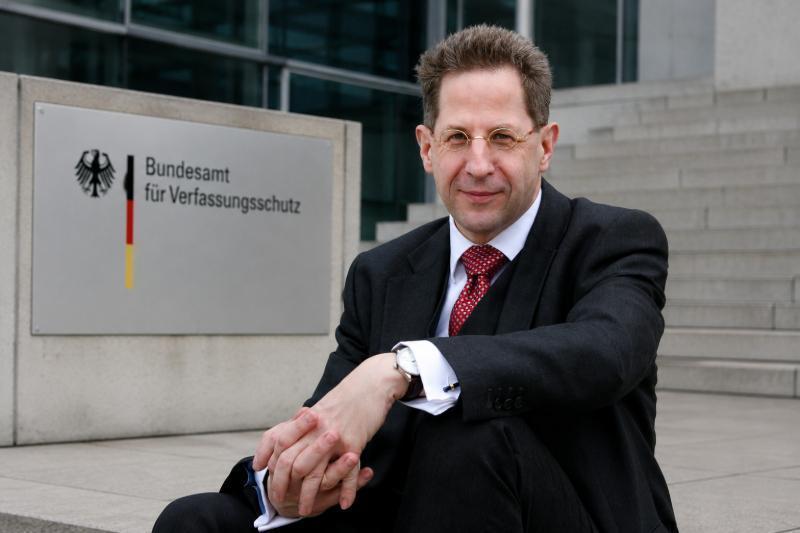

This event marks a historic precedent in the history of Western democracies: Dr. Hans-Georg Maaßen—a constitutional lawyer holding a doctorate, a long-standing senior official in the Federal Ministry of the Interior, and from 2012 to 2018 President of the Federal Office for the Protection of the Constitution (BfV)—is being monitored by his former intelligence agency and classified under the category of “right-wing extremism.”
Maaßen is taking legal action against this surveillance in a lawsuit before the Cologne Administrative Court. Through the transparency and research project “The Maaßen File” (die-akte-maassen.de), official agency briefs and records have been made publicly available. Maaßen explicitly views the legal proceedings not merely as an effort to resolve a personal rights violation, but as a civil society proxy battle for the freedom of political speech in Germany.
Chronology: From Top Constitutional Guardian to Object of Surveillance
Maaßen looks back on a decades-long career in public service. Since entering government service in 1988, he was considered an irreproachable civil servant; former Federal Minister of the Interior Otto Schily (SPD) once even referred to him as his “best man.” As head of the BfV, he led Germany’s central domestic intelligence service for over six years.
| Timeframe | Event / Status | Systemic Significance |
| 1988 – 2012 | Entry into public service, career milestones at the Interior Ministry | Recognized expert in asylum, citizenship, and security law. |
| 2012 – 2018 | President of the Federal Office for the Protection of the Constitution (BfV) | Top constitutional guardian of the Federal Republic. |
| 2018 | Reassignment to temporary retirement | Triggered by criticism of media narratives surrounding events in Chemnitz. |
| 2023 | Chairmanship of the WerteUnion association | Start of intelligence tracking and recording by the BfV. |
| Early 2024 | Announcement of the foundation of the WerteUnion political party | Expansion and formalization of intelligence storage (NADIS database). |
| Late 2025 / 2026 | Lawsuit at Cologne Administrative Court & document release | Publication of official agency files at die-akte-maassen.de. |
Agency Allegations: When Government Criticism Becomes “Delegitimization”
The agency submissions filed with the Cologne Administrative Court by the Federal Office for the Protection of the Constitution reveal altered standards regarding the tracking of citizens. The former BfV president is primarily accused of speech and opinion offenses:
- Substantive Government Criticism: Maaßen’s publicly voiced criticism regarding asylum and migration policies, mass naturalization practices, and warnings of economic and social decline in Germany are interpreted by the agency as attempts to “delegitimize” the state and its representatives.
- Criminalization of Political Terminology: The use of concepts from conservative or right-wing populist discourse is interpreted by the BfV as evidence of adopting “right-wing extremist narratives.”
- Absurd Conspiracy Accusations: As an egregious example, Maaßen points to agency briefs accusing him of serving anti-Semitic conspiracy theories simply because he publicly questioned whether then-U.S. President Joe Biden possessed the mental capacity required for office in the summer of 2024. The agency’s logic argued that denying Biden’s capacity implied a belief that elected politicians are manipulated as puppets by shadowy powers in the background.
The Core Problem: Legislative Changes and Expanding Surveillance Pressure
In his position statement, Maaßen emphasizes that his case is not an isolated incident. Through legislative amendments and the introduction of vague classification categories (such as “delegitimization of the state relevant to constitutional protection”), the powers of the domestic intelligence service have been significantly expanded:
- Lowering Surveillance Thresholds: While a substantiated suspicion of activities aimed against the free democratic basic order or involving violence/terrorism was previously required, matching disfavored narratives is now sufficient.
- Broad Impact on the Population: Thousands of citizens who were never involved in extremist organizations have come under intelligence scrutiny simply for expressing critical opinions.
- Existential Consequences: Being recorded by the domestic intelligence agency carries severe real-world consequences—from job loss in the public or private sector to account cancellations, social stigmatization, and total professional ruin.
Repression Matrix in the Case of Hans-Georg Maaßen
| Level | Mechanism | Impact on the System |
| Agency / Intelligence | NADIS entry, file classification under “Right-wing Extremism” | Transformation of constitutional protection into “government protection” |
| Legal / Administrative Court | Lawsuit at Cologne Court for deletion and injunction | Attempt to legally restrain executive overreach |
| Publicistic / Transparency | Publication of agency filings at die-akte-maassen.de | Exposing agency argument patterns to the public |
Conclusion: The Need to Depoliticize Domestic Intelligence
The proceedings before the Cologne Administrative Court serve as a benchmark for the state of the rule of law in Germany. When expressing opinions, engaging in fundamental government criticism, and participating in constitutional policy debates suffice to trigger intelligence tracking against citizens and opposition politicians, freedom of speech as a cornerstone of democracy is under severe threat.
The proxy battle led by Dr. Hans-Georg Maaßen targets a fundamental question: Will the Office for the Protection of the Constitution remain an instrument to safeguard basic rights against enemies of the constitution—or will it ultimately be transformed into an agency designed to discipline constitutional discourse and silence opposition voices?