
The People’s Republic of China (PRC) is the world’s second-largest economy and one of the most influential political powers of the twenty-first century. Since its establishment in 1949, the country has been governed by the Communist Party of China (CPC).
While China has experienced extraordinary economic growth and lifted hundreds of millions of people out of poverty, its human rights record continues to be the subject of international debate. Governments, international organizations, and non-governmental organizations have expressed concerns regarding freedom of expression, press freedom, religious freedom, judicial independence, digital surveillance, and the treatment of political opponents and human rights defenders.
The Chinese government rejects many of these allegations, arguing that its policies are intended to protect national security, maintain social stability, promote economic development, and combat terrorism and extremism.
China Between Economic Growth and Human Rights Concerns
Political System
China is a one-party state in which the Communist Party of China (CPC) occupies the leading political role.
The General Secretary of the Party and the President of the People’s Republic hold extensive executive authority.
Key characteristics of the political system include:
- the leading role of the Communist Party;
- limited political competition;
- centralized government administration;
- extensive state involvement in many areas of society;
- comprehensive public security and surveillance structures.
International observers differ in their assessments of political freedoms in China. Human rights organizations frequently criticize restrictions on civil liberties and political participation.
Freedom of Expression and the Press
China’s Constitution contains provisions concerning freedom of expression. However, according to numerous international organizations, the media and public communication operate within a comprehensive legal and regulatory framework established by the state.
Frequently discussed issues include:
- state influence over traditional media;
- internet censorship;
- restrictions on foreign online platforms;
- monitoring of digital communications;
- criminal prosecution of certain forms of speech.
Chinese authorities argue that these measures are necessary to protect public order, cybersecurity, and national security.
Political Opposition
Independent political opposition outside the Communist Party has only limited opportunities to operate.
International human rights organizations have documented criminal proceedings involving:
- democracy advocates;
- human rights lawyers;
- journalists;
- bloggers;
- labor activists;
- students;
- civil society advocates.
Chinese authorities maintain that prosecutions are conducted under existing law and are based on criminal conduct rather than legitimate political opinion.
Human Rights Lawyers and Civil Society
Since the early 2000s, many Chinese lawyers have specialized in defending civil rights, constitutional protections, and due process.
International organizations report that some of these lawyers have experienced:
- detention;
- house arrest;
- suspension of legal licenses;
- prosecution on national security charges.
Many non-governmental organizations also operate under significant legal and administrative restrictions.
Religious Minorities
The treatment of religious communities remains one of the most debated aspects of China’s human rights record.
International reports frequently discuss policies affecting:
- Uyghurs in Xinjiang;
- Tibetan Buddhists;
- unregistered Christian churches;
- practitioners of the Falun Gong movement.
Human rights organizations have documented allegations of restrictions on religious freedom, detention, and extensive surveillance.
The Chinese government states that its policies are designed to prevent terrorism, counter violent extremism, and preserve national unity.
Hong Kong
Following the large-scale protests in Hong Kong during 2019 and 2020, the Hong Kong National Security Law entered into force.
According to numerous international observers, the legislation significantly altered Hong Kong’s political and legal environment.
Frequently cited developments include:
- arrests of opposition politicians;
- prosecutions of activists;
- closure of independent media organizations;
- restrictions on public demonstrations.
The Chinese government maintains that the law restored stability and protected national security.
Digital Surveillance
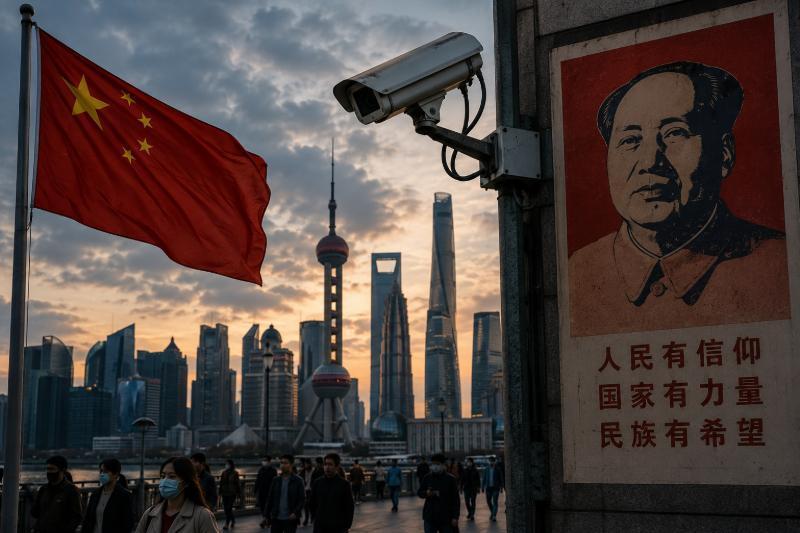
China has developed one of the world’s most extensive digital governance and surveillance infrastructures.
Researchers have described the use of:
- public video surveillance;
- facial recognition technology;
- digital identity systems;
- large-scale data analysis for public security purposes.
Critics argue that these technologies may pose significant challenges to privacy and civil liberties.
Chinese authorities emphasize their role in crime prevention, public safety, and efficient government administration.
International Reactions
Organizations including the United Nations, Amnesty International, Human Rights Watch, the European Union, and numerous governments regularly publish reports on China’s human rights situation.
Among the recommendations frequently made are:
- greater protection of freedom of expression;
- stronger judicial independence;
- the release of individuals considered political prisoners by international observers;
- better protection of religious freedom;
- increased transparency regarding government policies.
China rejects many of these assessments and characterizes them as interference in its internal affairs.
Historical Significance
China has become one of the most frequently discussed countries in contemporary debates concerning human rights and political freedoms.
The differing international assessments illustrate the broader tension between state sovereignty, national security, and universal human rights standards.
For historians, political scientists, and legal scholars, China remains an important case study in the analysis of modern authoritarian governance, state control, and international human rights policy.
Significance for the History of Political Persecution
The development of the People’s Republic of China illustrates how questions of political persecution are closely connected with national security, legal systems, and international human rights standards.
International organizations regularly document cases they consider politically motivated prosecutions or restrictions on fundamental freedoms. The Chinese government disputes many of these characterizations, arguing that its actions are lawful measures intended to preserve stability, security, and public order.
These differing perspectives make China a significant subject in the global discussion of political persecution, state sovereignty, and the protection of human rights.