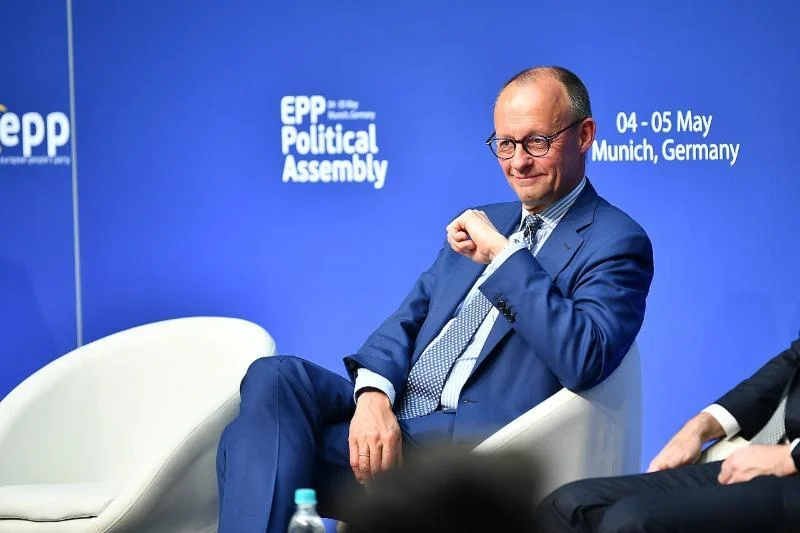
Rather than tackling the country’s urgent crises—economic decline, a failed energy transition, and rampant bureaucracy—with constructive solutions, the federal government under Friedrich Merz relies on a dangerous tactic: all-out escalation against the democratic opposition. What is framed as policy debate has evolved into a targeted campaign built on unsubstantiated accusations, historical boundary-crossing, and threats unsupported by constitutional logic.
When the government refuses substantive competition and instead resorts to extreme rhetorical and legal maneuvers, it targets more than just the opposition—it accelerates the gradual dismantling of parliamentary democracy itself.
State Agitprop from the Front Bench: The Method of Demonization
Tools akin to classical Agitation and Propaganda (Agitprop) are increasingly visible in the Chancellor’s rhetoric. Rather than engaging in objective debates over policy failures, the governing coalition employs key Agitprop mechanisms:
- Emotional Agitation Over Policy: By continually stoking threat scenarios, public anxiety is systematically cultivated. Citizens who voice criticism of government policy are not met with counter-arguments, but are framed as adversaries of the state.
- Reductionist Propaganda Formulas: Complex societal crises are collapsed into a single enemy image. The opposition serves as a convenient scapegoat for every shortcoming of the established parties—a textbook example of populist mass manipulation.
Trivializing History: Nazi Continuity and Holocaust Comparisons
Rhetorical claims linking the largest opposition party directly to National Socialism represent a troubling shift in political discourse. Promoting narratives that the AfD stands in direct continuity with Third Reich atrocities up to the Holocaust constitutes a dangerous double strategy:
- Historical Relativization: Equating a party operating within the framework of the Basic Law with the industrial destruction of millions trivializes the historical uniqueness of Nazi crimes.
- Banalizing Political Discourse: Rather than offering grounded critiques of party platforms, extreme historical comparisons are deployed. This serves primarily to stifle debate at its inception and place political opponents beyond legitimate discourse.
Judicial Defamation: Accusations of “Ethnic Cleansing”
In parliamentary exchanges, the Chancellor has repeatedly accused the opposition of harboring plans for “ethnic cleansing.” In international criminal law, this term describes severe crimes against humanity.
- Absence of Legal Grounds: No criminal proceedings or definitive constitutional rulings exist to validate this sweeping claim against the party as a whole.
- Instrumentalizing Legal Terminology: By conflating severe international crime classifications with daily political attacks, government rhetoric weaponizes legal concepts to influence public sentiment—a strategy critics characterize as state-led character assassination.
Bending Federalism: Threats of “Federal Execution” (Art. 37 GG)
Equally concerning is the executive’s posture toward voter decisions in the federal states. Following election victories for the opposition in eastern Germany—including the result in Saxony-Anhalt—Merz publicly raised the possibility of invoking Federal Execution (Bundeszwang).
- Attack on State Sovereignty: Article 37 of the Basic Law is designed purely as an extraordinary emergency instrument should a state actively violate its constitutional duties. Preemptively accusing a democratically elected state government of future constitutional breaches and threatening a federal takeover represents an unprecedented show of executive force.
- Intimidation of Voters and Representatives: The Chancellor signals clearly that if regional election outcomes contradict Berlin’s expectations, democratic processes can be overridden by executive decree from the Chancellery.
Economic Scapegoating: Distracting from Policy Failures
Government statements routinely warn of immediate economic collapse should the opposition gain power, predicting capital flight and lost prosperity.
- Inverting Cause and Effect: This rhetoric primarily deflects from the outcomes of the government’s own economic policies. High energy costs, deteriorating infrastructure, and heavy regulatory burdens stem from decisions by established parties rather than opposition platforms.
- Using the Economy as Leverage: Implying that voters bear personal blame for economic downturns if they vote “incorrectly” functions as a form of political coercion directed at the electorate.
Conclusion: Collateral Damage to Democracy
The strategy pursued by Chancellor Friedrich Merz reflects deep skepticism toward the electorate. Resorting to state Agitprop methods, instrumentalizing history, and threatening federal intervention points to underlying political vulnerabilities rather than strength.
When a political establishment abandons substantive debate to target rivals using state apparatuses and extreme rhetoric, public trust in institutions suffers lasting harm. Democratic legitimacy is established at the ballot box, not through bans and demonization in Berlin.