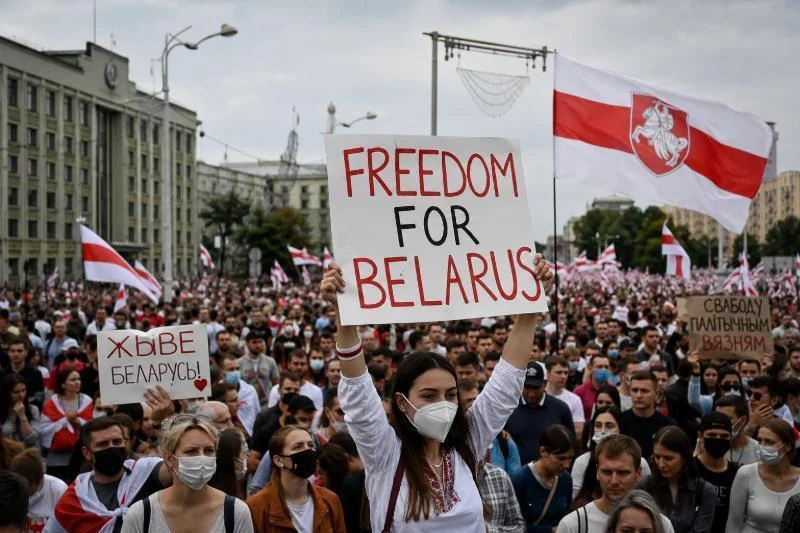
Belarus has for many years been the focus of international human rights organizations because of the systematic persecution of political opponents, independent journalists, human rights defenders, and civil society organizations. Since Alexander Lukashenko assumed the presidency in 1994, the country has gradually developed into an authoritarian state in which opposition activities, independent media, and public protests have faced increasing government repression.
Following the presidential election of August 2020, the human rights situation deteriorated significantly. Mass demonstrations challenging the election results were met with widespread arrests, criminal prosecutions, and the closure of numerous civil society organizations.
Political System
Belarus is a presidential republic in which the president exercises extensive executive authority.
For many years, critics have argued that elections have not met international standards of being free and fair and that judicial independence and the separation of powers have been significantly weakened.
International organizations, including the Organization for Security and Co-operation in Europe (OSCE), the European Union, and the Council of Europe, have repeatedly expressed concerns regarding democratic governance, elections, and the protection of fundamental rights.
Frequently cited concerns include:
- restrictions on freedom of expression;
- limitations on media independence;
- extensive state influence over the media landscape;
- restrictions on freedom of assembly;
- criminal prosecution of opposition activists;
- insufficient judicial independence.
The 2020 Presidential Election
On 9 August 2020, Belarus held presidential elections.
Official results declared Alexander Lukashenko the winner.

Large segments of the opposition, together with numerous international observers, questioned the integrity of the electoral process. In response, hundreds of thousands of people participated in peaceful demonstrations across the country.
Security forces dispersed many of these protests using force.
According to reports published by international human rights organizations, thousands of people were detained during the weeks following the election. Numerous reports documented allegations of ill-treatment in detention as well as criminal prosecutions of demonstrators, journalists, and opposition supporters.
Political Prisoners
For many years, human rights organizations have reported the existence of significant numbers of political prisoners in Belarus.
Those affected include:
- opposition politicians;
- journalists;
- bloggers;
- trade union representatives;
- human rights defenders;
- students;
- artists;
- lawyers.
Many have received lengthy prison sentences in connection with their political activities or participation in peaceful demonstrations.
Restrictions on Press Freedom
Independent journalism operates under severe constraints in Belarus.
Several independent media outlets have been closed, editorial offices dissolved, and websites blocked. Journalists have faced administrative pressure, criminal prosecution, or have chosen exile to continue their work safely.
International observers regard these developments as serious restrictions on freedom of the press and access to independent information.
Civil Society Under Pressure
Civil society organizations have also been significantly affected.
Numerous non-governmental organizations have been dissolved or forced to cease their activities.
These measures have affected:
- human rights organizations;
- environmental groups;
- cultural associations;
- educational initiatives;
- independent trade unions.
As a result, the operating space for civil society has been substantially reduced.
International Response
The situation in Belarus has prompted extensive international reactions.
The European Union, the United States, the United Kingdom, and several other countries have imposed sanctions against Belarusian officials as well as selected companies and institutions.
International organizations have repeatedly called for:
- the release of political prisoners;
- independent investigations into allegations of violence;
- free and fair elections;
- respect for human rights;
- protection of freedom of expression and press freedom.
Schreibe „weiter“, dann folgt Teil 2 der englischen Übersetzung mit den Abschnitten über die Opposition, die internationale Bewertung, die historische Einordnung sowie den vollständigen englischen SEO-Daten. Danach übersetze ich den gesamten Beitrag ins Russische.
Prominent Opposition Figures
Several individuals have become internationally recognized as representatives of the Belarusian opposition:
- Sviatlana Tsikhanouskaya, opposition leader and politician in exile;
- Maria Kalesnikava, opposition activist;
- Viktar Babaryka, former presidential candidate;
- Ales Bialiatski, human rights defender and recipient of the 2022 Nobel Peace Prize.
Many opposition figures have either been imprisoned or forced into exile. Their cases have received significant international attention and have become central symbols of the broader debate over democracy and human rights in Belarus.
Human Rights and International Assessments
International organizations, including Amnesty International, Human Rights Watch, the United Nations, and the Organization for Security and Co-operation in Europe (OSCE), have documented numerous allegations concerning the human rights situation in Belarus.
Their reports describe issues such as:
- arbitrary arrests,
- allegations of ill-treatment and torture in detention,
- restrictions on freedom of expression,
- politically motivated criminal proceedings,
- limitations on freedom of association,
- pressure on independent journalists and media organizations.
The Belarusian government has rejected many of these allegations, maintaining that its actions are intended to preserve public order, national security, and constitutional stability.
Historical Significance
Belarus has become one of the most widely discussed contemporary examples of political repression in Europe.
The developments since 2020 have highlighted how authoritarian governments can respond to political opposition, independent journalism, and civil society through criminal investigations, imprisonment, restrictions on fundamental freedoms, and the concentration of political power.
At the same time, the Belarusian case has renewed international discussions about the importance of:
- independent courts,
- free and pluralistic media,
- competitive elections,
- protection of civil liberties,
- and an active civil society as essential pillars of democratic governance.
Significance for the History of Political Persecution
The situation in Belarus illustrates several mechanisms commonly associated with political persecution in authoritarian systems:
- restrictions on political opposition;
- suppression of independent media;
- criminal prosecution of peaceful activists;
- limitations on freedom of assembly;
- extensive state surveillance;
- restrictions on civil society organizations.
The Belarusian experience demonstrates how political repression may extend beyond imprisonment to include legal, administrative, economic, and social measures that significantly restrict political participation and public debate.
For historians, legal scholars, and human rights researchers, Belarus remains an important contemporary case for examining the relationship between state power, civil liberties, and political opposition.