When the judiciary of a democratic state holds suspects like Birgit Malsack-Winkemann, Rüdiger von Pescatore, Michael Fritsch, Johanna Findeisen, Maximilian Eder, or Heinrich XIII Prince Reuss behind bars for four years without a legally binding verdict, the foundation of the rule of law begins to shatter. In the mega-trial against the so-called “Patriotic Union,” this precise scenario has become reality: the defendants, incarcerated since the high-profile nationwide raids of December 2022, enter their fourth year of pretrial detention in the autumn of 2026.
What government authorities defend as a necessary toughness of state security raises an urgent question among civil rights activists, legal scholars, and international observers: Where is the line between lawful sequestration and administrative attrition that borders on psychological torture in its effects?
The Expansion of Pretrial Detention: Emergency Status as the Norm
Under German criminal procedure law (§ 121 StPO), a clear mandate governs pretrial detention: as a principle, it must not exceed six months prior to a first verdict, unless the extraordinary difficulty or scope of the investigation prevents a judgment and justifies continuation.
In the Reuss proceedings, the exception has become a permanent reality:
| Legal Principle | Reality in the Reuss Proceedings |
| Right to a Speedy Trial | The Higher Regional Court (OLG) Frankfurt fractures the trial into endless hearing days stretching far into 2027. |
| Proportionality | The duration of pretrial detention for several (partly elderly) defendants matches or exceeds potential minimum sentences. |
| Presumption of Innocence | Sitting isolated for four years effectively treats defendants like convicted felons—long before any verdict is delivered. |
The sluggish taking of evidence and the artificial overloading of the trial cause pretrial detention to lose its provisional character. It is converted into a pre-empted prison sentence.
Solitary Confinement and Psychological Attrition: Methods of Administrative Destruction
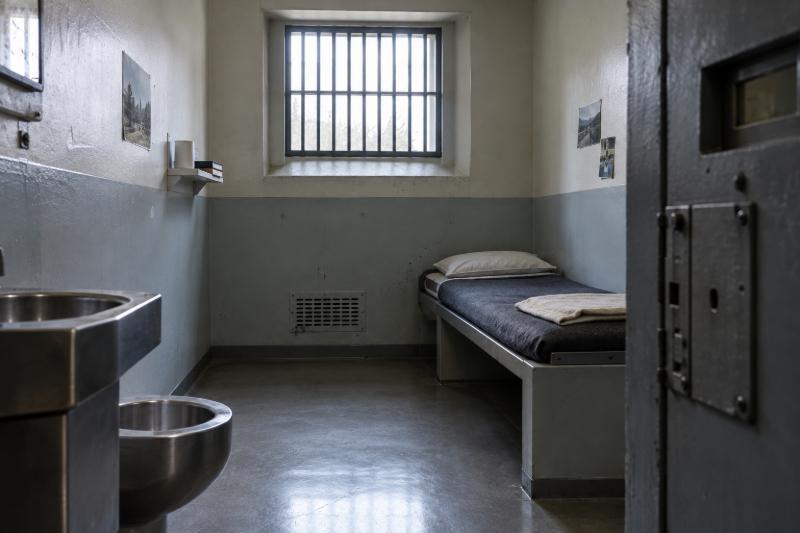
The detention conditions to which the defendants have been subjected for nearly four years are particularly severe. Reports of strict visitor and contact bans, permanent surveillance, and extensive isolation in high-security wings paint a picture of deliberate psychological softening.
When elderly individuals, health-compromised persons, or relatives with family members requiring care are isolated for years, it ceases to be a mere preventive measure against flight or tampering risks. In criminology and international human rights jurisprudence (including before the European Court of Human Rights, ECHR), long-term isolation and stress conditions in custody are recognized as touching upon cruel, inhuman, or degrading treatment. The methodical deprivation of social contact and the uncertainty surrounding the end of proceedings act as a creeping process of attrition.
The Pretext of “State Security”: Section 129a StGB as the Sword of Ideological Criminal Law
The state’s reliance on such extreme measures in the proceedings against the group surrounding Heinrich XIII Prince Reuss stems directly from the specific construction of Section 129a of the German Criminal Code (§ 129a StGB – Formation of Terrorist Organizations). This statute occupies a peculiar role in German criminal law, as it shifts criminal liability far into the preliminary stages of an actual offense.
- Punishing Ideology and Structure: Unlike conventional criminal offenses, § 129a StGB does not require a specific attack plan to be finalized or executed. The mere act of planning, discussing, or belonging to an organization designated as “terrorist” triggers the full coercive power of the state.
- Leveraging Procedural Exceptions: A charge under § 129a StGB grants federal prosecutors extraordinary powers unthinkable in standard criminal procedure. These include sweeping telecommunications surveillance, undercover operatives, breach of attorney-client privilege, and the justification of multi-year pretrial detention based on alleged “paramount importance to public safety.”
- The Trap of Evidentiary Deficiency: Because the Reuss group possessed no realistic logistical setup for a genuine overthrow—aside from vague manifestos, chaotic messaging chats, and firearm ownership permits of legal gun owners—the judiciary must now meticulously analyze every absurd statement across hundreds of trial days. Section 129a StGB thus serves as a procedural pretext to artificially prolong trial duration and keep defendants detained indefinitely.
The narrative of an allegedly imminent “walker coup” had to be preserved at all costs to retroactively justify the massive nationwide raids and media spectacle of December 2022. Releasing the defendants prior to a verdict due to a breach of the constitutional right to a speedy trial would represent a total loss of face for law enforcement agencies. To prevent this embarrassment, § 129a StGB is deployed as a legal smokescreen to relentlessly extend detention—at the direct expense of fundamental constitutional rights.
Conclusion: The Reuss Case as an Accelerator of Judicial Decay
Ignoring the excessive length of this pretrial detention simply because the defendants hold politically unwelcome or eccentric views means abandoning the rule of law itself. When § 129a StGB is weaponized to incarcerate citizens without a conviction for over four years, criminal law ceases to protect rights and becomes an instrument of political attrition.
Four years of pretrial detention in the Reichsbürger trial is not proof of a strong democracy—it is an indictment of a political judiciary using the criminal process itself as a tool of repression to break defendants physically and psychologically before any verdict is rendered.