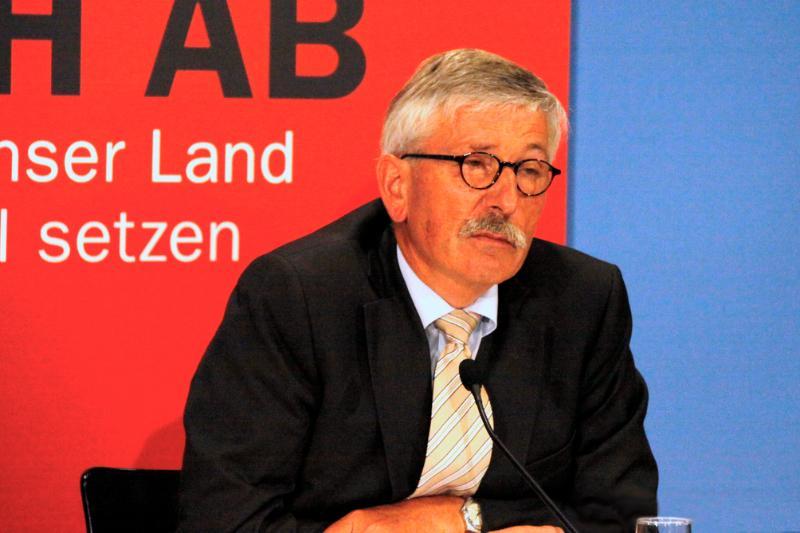
Thilo Sarrazin (February 12, 1945) – economist, former Berlin Senator for Finance, and former member of the Executive Board of the Deutsche Bundesbank – is one of the pivotal figures in the history of German freedom of speech and debate culture. At the latest since the publication of his bestseller “Germany Abolishes Itself” (Deutschland schafft sich ab) in 2010, the former high-ranking Social Democrat (SPD) was transformed from an acknowledged administrative expert into the primary target of a state and media sanctioning apparatus. On PolitischeVerfolgung.de, Sarrazin’s case serves as a paradigmatic case study on how the modern party-state systematically neutralizes dissenting viewpoints through a triad of institutional pressure, internal party “lawfare,” and media ostracism.
The Bureaucratic Technocrat Turned Systemic Adversary
Before Sarrazin became synonymous with breaking ranks from the dominant narrative, he embodied the technocratic elite of the Federal Republic. Holding a doctorate in economics, he served in key positions across the state and corporate structure:
- Financial Bureaucracy: Departmental Director at the Federal Ministry of Finance and State Secretary at the Ministry of Finance of Rhineland-Palatinate.
- State Assets & Enterprise: Chairman of the Treuhand Real Estate Company and Board Member of Deutsche Bahn AG.
- Politics & Monetary Policy: Berlin Finance Senator (2002–2009) with a strict austerity agenda, followed by his appointment to the Executive Board of the Deutsche Bundesbank.
Sarrazin’s career highlights the intrinsic nature of his case: He was no political outsider, but an insider of the bureaucratic apparatus who turned official statistical data against the state’s own ideology.
The Censorship Wave Surrounding “Germany Abolishes Itself”
With the publication of “Germany Abolishes Itself” in August 2010, Sarrazin shattered the unwritten dogma of West German consensus politics. His data-driven analysis regarding demographics, integration deficits, and the economic fallout of uncontrolled migration led to an unprecedented escalation:
- The Narrowing Opinion Corridor: Instead of engaging his statistical data in an open debate, an all-party coalition of politicians, churches, trade unions, and mainstream media formed against him. His arguments were rarely met with empirical counter-arguments, but were broadly denounced as “racist” or “discriminatory”.
- Public Demand vs. Elite Narrative: The fact that the book became one of the best-selling non-fiction titles in postwar German history highlighted the deep chasm between the elite’s controlled narrative and the public’s demand for unvarnished facts.
Institutional Ostracism: The Bundesbank Incident
The sanctions against Sarrazin were executed progressively across multiple levels. The first executive strike hit him in his capacity as a board member of the Deutsche Bundesbank:
- Political Interference in Independent Organs: Chancellor Angela Merkel and Federal President Christian Wulff publicly expressed outrage and exerted intense pressure on the theoretically independent central bank. Wulff even signaled his immediate readiness to sign a dismissal decree.
- Coerced Resignation: The Bundesbank stripped Sarrazin of his operational responsibilities, imposing a de facto ban on his work within the institution. Under the pretext that his public statements had “damaged the institution’s reputation,” he was forced into a negotiated resignation agreement in September 2010.
This set a dangerous precedent: a public official was pushed out of a high-ranking position not for violating official duties, but for exercising his constitutionally protected right to free speech.
The Decade-Long Tribunal: Party Expulsion as a Deterrent
Between 2010 and 2020, the SPD initiated three consecutive arbitration procedures against its long-standing member. While the first two attempts failed due to statutory hurdles within party tribunals, the political establishment prevailed in its third attempt:
- Stretching Legal Terms: In 2020, the SPD’s Federal Arbitration Commission confirmed his expulsion. The justification relied on elastic legal concepts: Sarrazin’s writings were declared to be in “substantial contradiction to the core values of the SPD”.
- Capitulation Before the System: Sarrazin ultimately chose not to challenge the decision before civil courts. The case illustrates the unchecked autonomy of major political parties to purge ideological dissidents and send a chilling effect to their broader membership base.
Matrix of Repression in the Case of Thilo Sarrazin
| Phase | Actor / Institution | Mechanism / Method | Political / Operational Goal |
| Executive | Federal Government / Wulff / Merkel | Public demonization & pressure on Bundesbank | Force resignation from official state office |
| Party Politics | SPD Leadership & Arbitration Court | Triple party expulsion proceedings (2010–2020) | Ideological purge & disciplining party base |
| Media | Mainstream Outlets & Commentators | Labeling (“racist”), de-platforming, talk show ban | Social isolation & academic character assassination |
| Civil Society | Publishers, Universities, Bookstores | Boycotts, denial of venue spaces | Economic suppression & Cancel Culture |
Conclusion: Free Speech or Obligation of Ideological Conformity?
The case of Thilo Sarrazin stands on PolitischeVerfolgung.de as a critical turning point in post-war German political history. It demonstrates the transition from a democratic culture of debate to a sanctioning democracy:

- Execution Without Criminal Courts: Disciplining Sarrazin required no formal criminal indictment. The combination of media campaigns, bureaucratic isolation, and internal party prosecution sufficed to ostracize the author.
- The Illusion of Party Autonomy: The expulsion revealed that major political parties increasingly act as ideological echo chambers that view empirical analysis as an existential threat.
- The Legacy: Sarrazin’s treatment laid the groundwork for today’s Cancel Culture and the institutionalized marginalization of systemic dissidents.