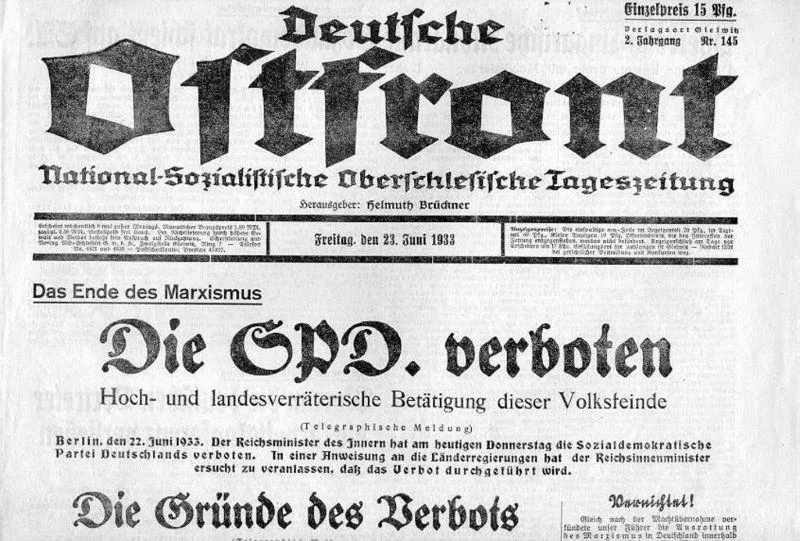
The Nazi regime (1933-1945) established the most comprehensive system of political persecution in modern history, creating a blueprint for totalitarian control that would influence oppressive regimes for decades. This wasn’t merely a government targeting opponents—it was a systematic reconstruction of society itself, where ideology dictated life and death.
The Machinery of Destruction: By the Numbers
The scale of Nazi persecution remains staggering even decades later:
- 6 million Jews murdered in the Holocaust
- 200,000+ disabled people killed in “euthanasia” programs
- 50,000 homosexual men convicted under Paragraph 175
- 1.2 million political opponents imprisoned or executed
- 220,000-500,000 Sinti and Roma victims of the Porajmos genocide
Systematic Elimination of Opposition
The Step-by-Step Destruction of Democracy
1933: The Legal Revolution
- February: Reichstag Fire Decree suspended civil liberties
- March: Enabling Act granted Hitler dictatorial powers
- April: Law for the Restoration of the Professional Civil Service removed “undesirables”
- July: Law Against the Formation of Parties established one-party state
Targeted Party Bans:
- Communists (KPD) banned after Reichstag fire
- Social Democrats (SPD) outlawed as “enemies of state”
- Centrist parties forced into “voluntary” dissolution
Instruments of Terror
The SS and Gestapo:
- Operated outside judicial constraints
- Empowered to arrest without charge
- Ran concentration camp system
The Legal System’s Complicity:
- Special courts for political cases
- Prosecutors seeking death sentences for minor offenses
- Judges applying laws retroactively
The Hierarchy of Hate: Victims of Nazi Persecution
Political Opponents
- Communists, socialists, trade unionists
- First inmates of Dachau (opened March 1933)
- Ernst Thälmann (KPD leader) imprisoned 11 years before execution
Jewish Population
- 1935: Nuremberg Laws stripped citizenship
- 1938: Kristallnacht unleashed organized violence
- 1941: Wannsee Conference planned “Final Solution”
- 1942-1945: Industrialized murder in extermination camps
Sinti and Roma
- Classified as “asocial” and “inferior”
- Subject to medical experiments
- Entire families exterminated in camps
People with Disabilities
- T4 program pioneered gas chamber technology
- Doctors selected victims for “mercy killing”
- Protest from churches eventually stopped official program (though killings continued covertly)
Homosexual Men
- Paragraph 175 expanded to allow harsh sentencing
- Pink triangle designation in camps
- Many re-imprisoned after war under same laws
Religious Dissenters
- Jehovah’s Witnesses refused to swear loyalty oaths
- Thousands imprisoned for conscientious objection
- Christian clergy who spoke out faced arrest
The Language of Destruction: Dehumanization as Policy
The Nazis perfected the art of dehumanization through propaganda:
Animal Comparisons:

- Jews depicted as rats and parasites in films like “The Eternal Jew”
- Slavic peoples characterized as subhuman
- Biological metaphors of “disease” and “infection”
Scientific Language:
- Racial hygiene theories gave prejudice academic credibility
- Medical terminology justified sterilization and killing
- Bureaucratic euphemisms like “final solution” masked genocide
Resistance and Courage: Those Who Said No
Despite overwhelming terror, resistance persisted:
The White Rose:
- Student group distributing anti-Nazi leaflets
- Sophie and Hans Scholl executed 1943
July 20 Plot:
- Claus von Stauffenberg’s failed assassination attempt
- Widespread military involvement revealed internal opposition
Everyday Defiance:
- Ordinary Germans hiding Jewish neighbors
- Workers deliberately slowing production
- Churches protesting euthanasia program
The Troubled Legacy: Denazification and Its Failures
Postwar Germany struggled to confront its past:
Incomplete Justice:
- Many Nazis resumed careers in West Germany
- Cold War priorities often trumped accountability
- Victims of Paragraph 175 continued to be persecuted
Political Continuities:
- Former Nazis found homes across political spectrum
- Some reached high positions in democratic Germany
- Full reckoning took decades to begin
Lessons for Today: Vigilance Against repetition
The Nazi experience teaches enduring lessons about protecting democracy:
1. Institutional Safeguards
- Independent judiciary resistant to political pressure
- Constitutional protections against emergency powers abuse
- Free press capable of speaking truth to power
2. Social Responsibility
- Rejecting dehumanizing language against any group
- Protecting minority rights against majority prejudice
- Valuing pluralism and diversity as democratic strengths
3. Historical Awareness
- Understanding how democracies decline gradually
- Recognizing early warning signs of authoritarianism
- Maintaining memorial culture to honor victims
Conclusion: The Fragility of Civilization
The Holocaust represents not just German history but human history—a warning about what ordinary people are capable of under certain conditions. The meticulous records kept by the perpetrators testify to the banality of evil: genocide administered by bureaucrats, implemented by professionals, and tolerated by millions.
Remembering this history isn’t about collective guilt but collective responsibility—to ensure that never again means never again for any group, anywhere.
As we face new challenges with surveillance technologies, populist movements, and rising intolerance, the Nazi era remains our darkest mirror, reflecting what happens when humanity loses its moral compass.