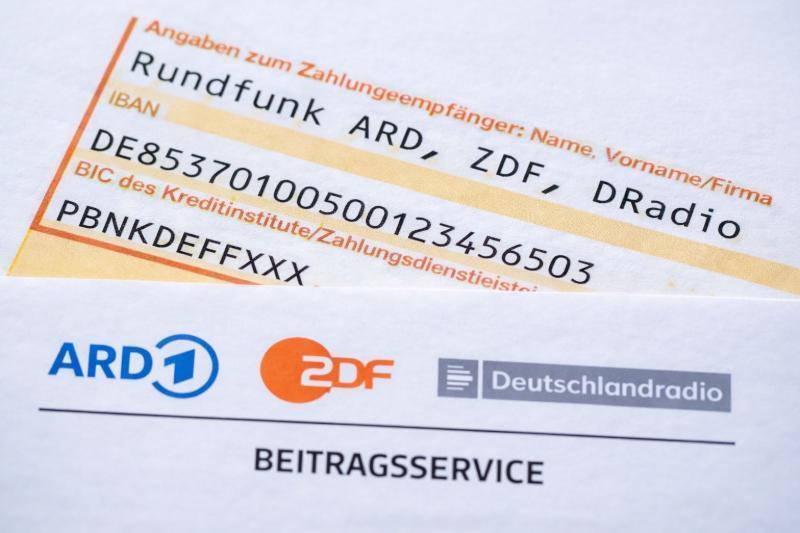

The cases of Sieglinde Baumert and Georg Thiel have made legal history. They demonstrate the lengths to which the German state will go to enforce the financing of public service broadcasting (ÖRR). However, in 2026, there are ways to resist without risking your personal freedom in prison.
We document the mechanisms of state pressure and provide you with the tools to defend your rights effectively.
Icons of Resistance: Baumert and Thiel
Why do people go to prison over a broadcasting fee? It is a fundamental refusal to fund a system perceived as biased, state-aligned, or obsolete.
- Sieglinde Baumert (2016): Spent 61 days in detention. She owned no receiving devices and refused on principle to pay for an unrequested service.
- Georg Thiel (2021): Served a record 181 days. His case exposed the absurdity of the system: the costs of his incarceration (approx. €135/day) vastly exceeded his original debt of around €650.
The Paradox: Neither was imprisoned for “debt.” They were imprisoned for refusing the Disclosure of Assets (Vermögensauskunft). The state uses civil law as a lever to break political disobedience through coercive detention.
Secure Resistance: How to Avoid Imprisonment
One can protest the broadcasting fee without giving the state the legal grounds for incarceration. The key lies in procedural precision.
The Path of Objection
You must file a written objection (Widerspruch) against every official Contribution Notice (Beitragsbescheid) within one month. If this is rejected, the only remaining option is to file a lawsuit in the Administrative Court. Note: Since objections against public levies usually do not have a “suspensive effect,” enforcement often continues in the background.
Strategy: Payment “Under Reservation”
To safely avoid seizures and arrest warrants, we recommend payment under reservation (Zahlung unter Vorbehalt). This deprives the contribution service of the basis for coercive measures while preserving your right to a refund if the system is overturned (e.g., by a high court ruling in late 2026).
Sample Clause: Declaration of Reservation “I hereby declare that payments for account [number] are made exclusively under reservation of legal clarification. Payment is made without recognition of a legal obligation and solely to avert coercive enforcement measures. I expressly reserve the right to reclaim these funds should the contribution obligation be declared unconstitutional by high court rulings (e.g., BVerfG or CJEU).”
The “Life Insurance”: Disclosure of Assets
If, despite your objection, a bailiff (Gerichtsvollzieher) arrives at your door, there is a clear line you should not cross for the sake of your freedom: Provide the Disclosure of Assets. As long as you truthfully state what you own (even if it is nothing), enforcement detention cannot be ordered. Imprisonment only threatens those who refuse to testify.

Outlook 2026: A System in Flux
2026 could be the turning point. The Federal Administrative Court indicated in 2025 that the obligation to pay could end if the broadcaster structurally violates its mandate for balanced reporting. Those paying “under reservation” today are securing their place at the front of the line for future refunds.
Conclusion: The fight against forced fees is a marathon, not a sprint. Those who, like Baumert or Thiel, choose the path to a cell deserve respect for their moral signal. However, those who wish to wear down the system through lawsuits and reserved payments must use the bureaucratic weapons of the rule of law—staying persistent, smart, and free.