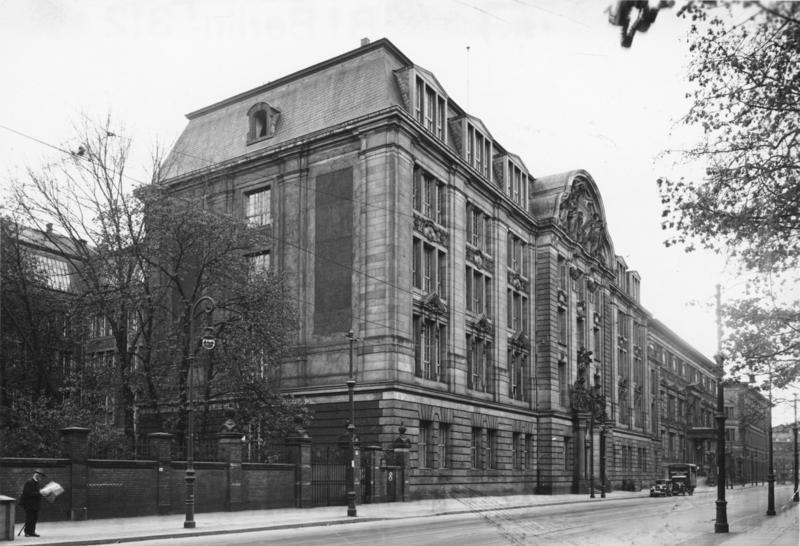

“History doesn’t repeat itself, but it does rhyme.” This oft-quoted bon mot by Mark Twain takes on an oppressive relevance in light of current developments within the Berlin Republic. When we discuss the expansion of powers for the BND and the Verfassungsschutz, the deployment of AI for mass surveillance, and the systematic denunciation of political dissidents today, a look into the darkest chapters of German history is indispensable. The Secret State Police (Gestapo) of the Nazi era stands as the ultimate warning of how rapidly a constitutional state can warp into an instrument of oppression. Yet anyone who believes the Gestapo is a closed chapter, existing only in history books, is profoundly mistaken. The methods of surveillance and political persecution have digitized, but the objective remains unchanged: securing regime dominance by decomposing the political opponent.
The Gestapo System: Not Just Terror, But Engineered Paranoia
The Gestapo was far more than a gang of men in leather trench coats. It was a vast bureaucratic apparatus fueled by a single operational principle: paranoia. The goal was to turn every citizen into a potential informant and every private conversation into a potential act of treason. The true strength of the Gestapo lay not in its sheer size—it was relatively small compared to the total population—but in its efficiency at generating a pervasive climate of fear.
- The Power of Denunciation: The system relied heavily on the active complicity of the populace. Neighbors reported neighbors; colleagues denounced colleagues. Mere “intent” or a “subversive mindset” (staatsfeindliche Gesinnung) sufficed to land a citizen in protective custody (Schutzhaft).
- Preventive Persecution: The Gestapo did not wait for a crime to occur; it acted preventively. Anyone deemed a “danger” to the ideological orthodoxy was neutralized long before they could ever act.
- Gleichschaltung of Opinion: Any form of public criticism leveled against the regime was framed as an existential attack on the state. “Criticism” was reclassified as “treason,” and “opposition” became “high treason.”
This principle of Schutzhaft—detention without a judicial warrant or judicial review—stands in absolute contrast to a free constitutional state. While we do not see concentration camps today, we are witnessing a creeping erosion of constitutional guarantees, where manufactured “security concerns” are increasingly prioritized over fundamental rights.
The Digital Gestapo: When Algorithms Turn Informant
What the Gestapo of the 1930s and 40s had to painstakingly assemble using index cards, mail interception, and human informants, modern algorithms and AI now execute in milliseconds. Modern political persecution takes place in the digital sphere.
When domestic intelligence agencies begin recruiting youths as informants against their teachers or parents, this is not a “modern defense of democracy.” It is the institutionalization of systematic mistrust, precisely mirroring the system once perfected by the Gestapo. When state authorities are empowered to reroute data streams and deploy targeted disinformation, it represents the digital revival of Zersetzung (decomposition)—a psychological warfare method later perfected by the Stasi, rooted deeply in totalitarian claims to absolute power.
“Defending Democracy” as a Subversive Cloak
The Gestapo justified its atrocities under the banner of “securing national existence.” Today, the ruling class justifies its mass surveillance schemes as “securing a resilient democracy” (wehrhafte Demokratie). The term “democracy” is wielded like a fetish to legitimize measures that destroy democracy at its core. Anyone who criticizes the policies of the Berlin party cartel today—who stands against uncontrolled migration, climate fanaticism, or the erosion of liberty—is branded a “delegitimizer” by intelligence agencies acting as an extended arm of the government.
The historical parallel is striking: criticize the state, and you are declared an enemy of the state. Today, political persecution no longer manifests as open violence on the streets, but through social ostracization, the deliberate destruction of professional livelihoods, and intelligence agency surveillance.
The Creeping Erosion of the Constitutional State
We must take the lessons of history seriously. The Gestapo only attained its absolute power because the primary checks and balances—the courts, the press, civil society—were either dismantled or voluntarily fell into line (Gleichschaltung). Today, we observe an identical trajectory:

- Dismantling Privacy Oversight: When independent data protection watchdogs are stripped of power because they stand in the way of “security,” the citizen’s final guardians are effectively silenced.
- Disempowering the Judiciary: When legal definitions are drafted so broadly (catch-all paragraphs) that the executive branch and intelligence agencies can self-interpret who qualifies as an “extremist,” judicial review becomes a farce.
- Coercive Conformity: The political “firewall” (Brandmauer) erected against anything outside the approved narrative ensures that citizens self-censor their views out of fear of professional ruin or social banishment.
This is not the overt physiscal terror of the 1940s, but it is the exact fertile soil upon which totalitarian systems grow. Political persecution invariably begins when the state starts segregating “good” from “bad” citizens, stripping the “bad” citizen of their fundamental rights.
Conclusion: Resistance is the Citizen’s Duty
History proves that a state that no longer trusts its citizens, opting instead for preventive surveillance, has shattered its moral compass. The methods of the Gestapo—the manufacturing of fear, the total invasion of the private sphere, and the stigmatization of the opposition—must never be accepted as standard state practice.
If we permit the expansion of the intelligence apparatus today, if we accept that our private chat messages are scanned without any suspicion (anlasslos) and our children are groomed to spy for the state, we betray the heritage of liberty. Political persecution in the modern Berlin Republic is far more subtle, but not a shred less dangerous than in the past. It is our duty to confront these developments with an alert mind and vocal dissent.
PolitischeVerfolgung.de will continue to expose these wounds. We will not be intimidated—neither by intelligence agencies nor by the Brandmauer elites. A free citizen is the only true foundation of real democracy.