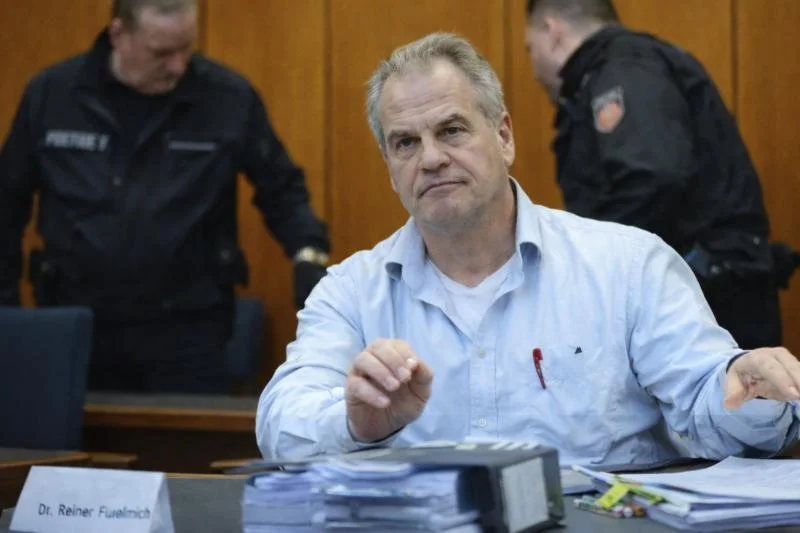
The arrest and ongoing detention of attorney Dr. Reiner Fuellmich have become a symbol of how the German judiciary deals with prominent critics of the state’s measures. From the perspective of many observers, the proceedings show signs of a politically motivated trial.
Dr. Reiner Fuellmich, a world-renowned trial lawyer known for his work in major consumer protection cases against corporations like Volkswagen and Deutsche Bank, became one of the most prominent voices of the international resistance against the legal and medical measures taken during the COVID-19 pandemic. Through the “Corona Investigative Committee,” he reached millions of people worldwide.
The Unusual Circumstances of the Arrest
The manner of his arrest in October 2023 caused an international stir. While staying in Mexico, Fuellmich was effectively lured into the German consulate under the pretext of a passport issue, where he was detained and subsequently deported to Germany. Legal experts criticize this “shuttle diplomacy” between authorities as a bypass of formal extradition proceedings, which are usually subject to strict judicial review.
Legal Accusations vs. Political Context
The official charges against Fuellmich involve allegations of financial irregularities and breach of trust related to the funds of the Corona Investigative Committee. While the judiciary treats this as a purely criminal matter, critics point to several anomalies:
- The Severity of Measures: The use of pre-trial detention (U-Haft) for nearly a year in a case involving financial disputes between private parties is considered disproportionate by many legal experts.
- The Duration of Detention: Despite his status as a lawyer and his deep roots in the legal community, the court continues to cite a “flight risk” to justify his continued incarceration.
- Isolation: Reports from his legal defense team suggest that Fuellmich has faced significant hurdles in preparing his defense, including restricted access to documents and communication.
US Diplomacy for Reiner Füllmich? Kennedy Associate Lehrman Raises Heavy Accusations Against German Judiciary
The political dimension surrounding the proceedings against Dr. Reiner Füllmich is intensifying on an international level. Leland Lehrman, a MAHA advisor and figure from the inner circle of Robert Kennedy Jr., has visited the German attorney in prison. The meeting, accompanied by Füllmich’s lawyer Katja Wörmer and BAM! correspondent Kerstin Heusinger, was held to discuss options for diplomatic backing from conservative circles in the United States.
Lehrman’s analysis of the current situation in Germany is drastic:
- Criminalization of Government Critics: For Lehrman, Füllmich is a textbook political prisoner. The judiciary is weaponized as an extended arm of politics; consequently, Füllmich has a legitimate claim to political asylum.
- The Role of Secret Services: The allegations of breach of trust or other financial misconduct are merely a pretext. In reality, the Verfassungsschutz and the prosecution artificially built the case since 2021 to penalize Füllmich for his fundamental opposition to the Corona regime.
During his trip to Germany, Lehrman plans to shed light on the fates of other detainees, including Dr. Bianca Witzschel and Johanna Findeisen.
His global conclusion draws a clear battle line against the establishment: Dismantling the “Deep State” must become the highest priority for the global community. Only a radical stripping of power from these networks can prevent humanity from being progressively steered into a climate, healthcare, war, or technological dictatorship. Each of these structures is highly dangerous and must be recognized as a mere instrument of institutionalized abuse that needs to be broken up.

Conclusion – A Signal to the Opposition
For PolitischeVerfolgung.de, the Fuellmich case fits into a broader pattern of “lawfare” – the use of legal systems to silence political dissidents. By criminalizing the leading figures of the protest movement, a dual effect is achieved: the individuals are neutralized, and the movement is deterred.
The trial against Reiner Fuellmich is not just about balance sheets and bank transfers; it is a test for the German constitutional state. The question remains: is the law being applied equally, or is a “special law” being created for those who challenge the state’s narrative too effectively?
Wer Reiner Füllmich‘s aufrichtig, mutiges und authentisches Wirken, auch weit vor Corona, persönlich erleben durfte, weis dass Reiners Schilderung zu den Umständen und Motiven der Verhaftung
1:1 als gegeben verstehen werden.
Ich kenne Reiner auch persönlich seit den 90er Jahren. Auch auf diesem Wege wünsche ich Reiner viel Kraft, Mut und Gottes Segen für seine weiteres Wirken für die weltweite Menschheitsfamilie!
Genau wer kennts nicht, Whirlpool kaufen um das Geld vor dem Staat zu schützen.
Wer diesem Typen noch glaubt, der ist an Naivität nicht zu überbieten.
Ich fand ihn am Anfang auch gut, aber spätestens mit seiner Sammelklage und den großkotzigen Ankündigungen, die nichts als heiße Luft waren, wurde er mir extrem suspekt.
1. Du bringst da leider was durcheinander. Um der Geld des CA vor dem Staat zu schützen, wurde es in Gold angelegt. Der Verwurf der “Veruntreuung” wurde aber hauptsächlich aufgrund eines Darlehens erhoben.
2. Selbst wenn sich Füllmich von diesem Darlehen hundert Whirlpools gekauft hätte (das ist seine Sache), würde das keine Rolle spielen. Füllmich hat es längst zurückgezahlt.
3. Wie das mit der Sammelklage funktioniert und wie lange das möglicherweise dauert, hat Füllmich stets kommuniziert. Sie ist auch noch längst nicht vom Tisch, obgleich Füllmichs politisch bedingte Inhaftierung wenig dazu beträgt, das Ganze zu beschleunigen.
Du solltest dich vielleicht etwas intensiver mit dem ganzen Thema beschäftigen…
Dorothea Thul muss auch genannt werden.
Füllmich ….. ich hoffe er hält durch.
Sorry – meinte natürlich “das Geld”!
Ich nix Aussegländer… 😉