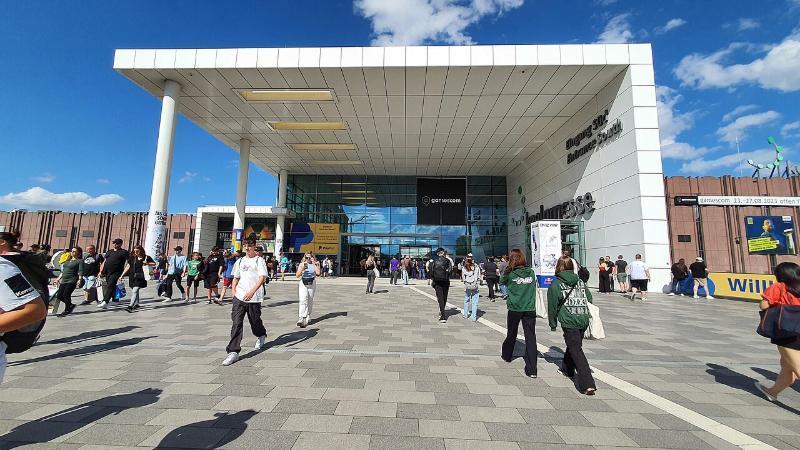
A spectre is haunting the corridors of German industry associations and trade fair companies: the fear of genuine, unpredictable discourse. What was once conceived as a celebration of pop culture, technological innovation, and global exchange is increasingly turning into a venue for ideological self-cleansing. The announcement by the industry association Game to generalise the exclusion of representatives from an elected parliamentary party—specifically the AfD—from the Gamescom trade fair in Cologne is more than just a regrettable episode in political and media operations. It is a worrying symptom of the narrowing of political space in Germany, where the exclusion of elected opposition members is being elevated to a virtue.
The Narrowed Space for Debate: When Ideological Vetting Replaces Discourse
A liberal democracy relies on the principle of inclusion, on enduring divergent views, and on open debate. Anyone who takes the principles of the rule of law seriously leaves the determination of unconstitutional activities to the courts designated for this purpose—not to the PR strategists of industry associations or the managing directors of trade fair companies. When Felix Falk, Managing Director of the Game association, states that the AfD “simply does not fit our values at all”, an industry association takes it upon itself to act as an ideological vetting authority over millions of citizens, taxpayers, and video game enthusiasts.
This reflects a logic that systematically empties the political space. Where substantive argumentation once stood, the tool of deplatforming now dominates—the revocation of platforms, halls, advertising space, and discussion forums. This tactic does not even attempt to argumentatively challenge the political opponent or address social conflicts within the realm of public debate. It attempts to render them invisible. However, the assumption that political movements supported by millions of voters can be made to disappear by issuing entry bans at a trade fair is not only naive, but deeply anti-democratic.
The Double Standard of Tolerance: A Selective Concept of Diversity
The procedure appears particularly paradoxical when analyzing the trade fair management’s justifications. It is repeatedly emphasized that they stand for “diversity,” a “respectful coexistence of different perspectives,” and an “open society”. Yet, taking these terms at face value reveals that current practices reduce them to a mere facade.
Tolerance is not demonstrated where people mutually confirm their values within a circle of like-minded individuals. Genuine tolerance manifests precisely at the boundaries where it hurts—where uncomfortable, sharp, and opposition positions collide. If a leading trade fair like Gamescom redefines the concept of “openness” so that it only applies to that part of the political spectrum sharing its corporate consensus, it engages in deceptive labeling. The promised diversity shrinks down to a homogeneous comfort zone where dissenting voices are systematically kept outside.
The Causality of Displacement: Symbolic Politics Instead of Real Debate
This form of trade fair activism triggers a displacement effect that reaches far beyond the Cologne exhibition grounds:
- Promoting Parallel Public Spheres: By denying opposition actors space to participate in general social discourse, established institutions force these actors and their supporters into isolated parallel structures. This fuels the very segregation of the public sphere they claim to combat.
- Instrumentalization by State Leadership: It leaves a bitter taste when the Federal President is welcomed as a guest of honor and celebrated for his stance at the very same event, while elected opposition MPs remain excluded. In this way, a supposedly neutral industry platform is alienated into a stage for state-sponsored exclusion rituals.
- Martyr Effect and Loss of Trust: For the opposition’s voter base, exclusion does not act as a deterrent. Instead, it confirms the narrative of a cartel-like alliance of media, associations, and politics that fears competition of ideas and uses exclusion mechanisms to shield itself from criticism.
Political Persecution in the Digital and Cultural Age
When discussing political repression and pressure on the opposition in the 21st century, we must not limit our perspective solely to historical or classical forms of state persecution. Today, repression begins much more subtly. It manifests in gradual social ostracization, calls for media boycotts, the cancellation of bank accounts, and systemic exclusion of opposition politicians from the public square.
Where associations begin acting as constitutional protection agencies and trade fairs become ideologically sanitized zones, the foundation of free opinion-forming is damaged. It creates a climate of self-censorship: companies, artists, and developers must fear falling into the vortex of disapproval if they do not vocally commit to the official association line or maintain contacts with the wrong side.

Conclusion: Return to the Strength of Genuine Controversy
A confident democracy needs no walls—neither in people’s minds nor in front of exhibition halls. Gamescom’s rejection of the parliamentary opposition is not a sign of moral stance or social strength, but a admission of failure by an insecure debate culture.
Video games and global gaming culture have always been defined by bringing together people of diverse backgrounds, convictions, and lifestyles. An association representing this culture should possess the maturity to endure political reality and openly address conflicts instead of indulging in moral complacency. The duty of an open society is not to lock out the opposition—but to challenge their arguments with better ones. Those who resort to exclusion ultimately damage the very democracy they claim to protect.