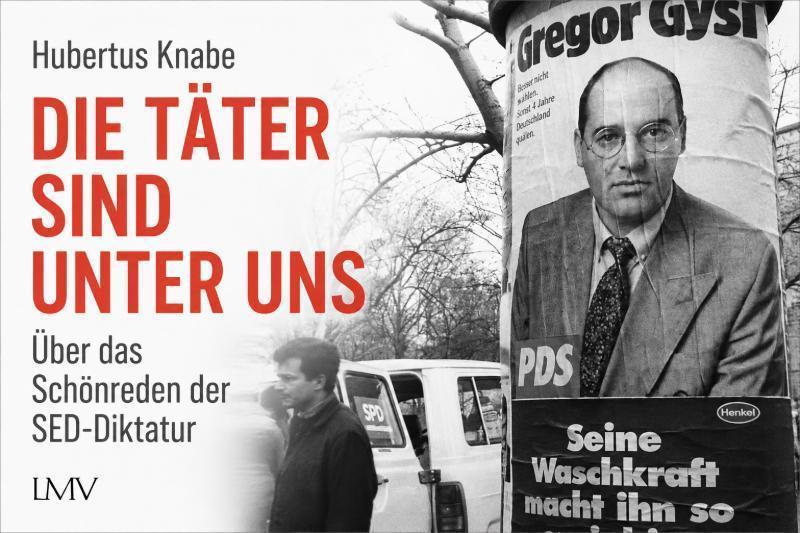
The transition from a dictatorship to a constitutional democracy almost always leaves behind a profound moral and legal vacuum. Hardly any historian has exposed this wound of post-reunification Germany as relentlessly as Hubertus Knabe. In his 2007 seminal work “The Perpetrators Are Among Us: On Downplaying the SED Dictatorship”, the former director of the Berlin-Hohenschönhausen Memorial traces how former officials and operatives of the East German repressive apparatus easily managed to gain a foothold in unified Germany—while many victims continue to struggle for compensation, belated justice, and social recognition.
The case of former East German political officer Sven Hüber serves as a textbook example of Knabe’s central theses.
What Is Knabe’s Book About?
Hubertus Knabe analyzes the mechanisms through which the crimes of the SED regime were downplayed, bureaucratically processed, or simply forgotten after 1989. His core premise: the German judiciary and political establishment failed to adequately hold the East German unrighteous state legally and personally accountable.
Knabe structures his critique around three main pillars:
- Judicial Failure: Lenient sentences, statutes of limitations, and the application of East German law meant that only a fraction of crimes (such as the shoot-to-kill order at the inner-German border or Stasi psychological decomposition tactics) were ever prosecuted.
- Institutional Continuity: Former full-time employees of the Ministry for State Security (Stasi) and political officers of the GDR border troops secured positions in the public service and private sector.
- Retraumatization of Victims: While former GDR functionaries built successful post-wende careers, the trauma of victims was bureaucratically devalued.
The Case of Sven Hüber: Testing Knabe’s Arguments
In debates surrounding the legal and personnel processing of the East German past, the Sven Hüber case plays a pivotal role. Hüber, who served as a political officer in the GDR border troops, exemplifies the structural continuities and legal battles that Knabe criticizes in his work.
1. Seamless Career in the Security Apparatus of the Constitutional State
Following the collapse of the GDR, Sven Hüber successfully transitioned into the German Federal Border Guard (later Federal Police)—a process that underscores Knabe’s critique of flawed screening mechanisms during reunification. Despite his background, Hüber advanced in the public service and eventually became deputy national chairman of the German Police Union (GdP).
2. Constitutional Protections Used as a Shield
Over many years, revelations surrounding Hüber’s biography led to fierce legal and political disputes. The case exposed the core paradox highlighted by Knabe:
- Lack of Consequences: Former political officers holding leadership roles in police unions and executive law enforcement agencies felt like a historical betrayal to former political prisoners.
- Leveraging Rights to Privacy: Hüber used press law and legal remedies over years to oppose media references connecting his name to his GDR past. Knabe condemns this dynamic: the rule of law protects actors of the old regime with the exact legal tools those actors once denied to their victims.
Comparison: Knabe’s Theses vs. The Sven Hüber Case
| Knabe’s Thesis in “The Perpetrators Are Among Us” | Manifestation in the Sven Hüber Case |
| Institutional Vulnerability: Former GDR operatives integrate into post-1989 law enforcement and administration. | Continued employment in federal security apparatus and rise to deputy head of the German Police Union. |
| Downplaying Authoritarian Past: Operatives frame their actions as lawful state service or standard biography. | Defense of personal history and active legal challenges against critical reporting. |
| Retraumatization of Victims: Persecuted individuals encounter former oppressors in public agencies. | Distress among victims over former border troop officers serving in law enforcement representation. |
Conclusion: Does the Sven Hüber Case Prove Hubertus Knabe Right?
Yes, in large part. The Sven Hüber case accurately illustrates the vulnerabilities of German reunification processing exposed by Knabe: the tendency of the constitutional state to prioritize bureaucratic pragmatism and reconciliation over rigorous accountability.

- Ideal for: Historians, political scientists, transitional justice initiatives, and readers seeking to understand post-1989 personnel continuities.
- Rating: 4.5 / 5 Stars — Highly Recommended