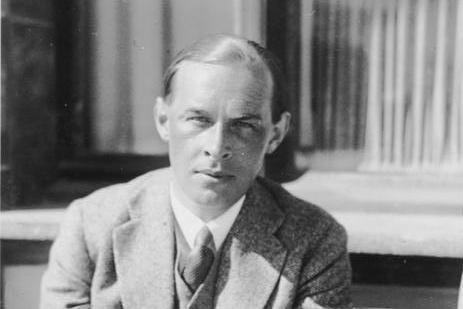
When pyres burned across German university towns in May 1933, the works of Erich Maria Remarque were among the very first to be cast into the flames. His world-famous 1928 anti-war novel All Quiet on the Western Front had shattered the dogma of heroic military glory in the trenches. With unyielding precision, Remarque depicted the physical and psychological devastation of World War I, giving voice to a traumatized generation. For the rising National Socialist regime, Remarque was an enemy of the state of the highest order. However, because the author escaped the immediate grasp of the Gestapo by fleeing abroad, the Nazi apparatus turned its lethal vengeance toward an undefended family member: his younger sister Elfriede Scholz. Her fate stands as a stark example of a politicized, tyrannical justice system that murdered surrogates to punish dissidents living in exile.
Incitement, Defamation, and Exile: The Remarque Case
Nazi hatred against Erich Maria Remarque erupted long before Adolf Hitler formally assumed power. As early as December 1930, SA stormtroopers, under the direction of Joseph Goebbels, orchestrated violent riots in Berlin movie theaters to stop screenings of the Hollywood film adaptation of All Quiet on the Western Front. Stink bombs were thrown, white mice were released into the auditoriums, and theatergoers were assaulted.
Simultaneously, Nazi propaganda launched a smear campaign aimed at dehumanizing the author. Rumors were spread that Remarque’s real name was “Kramer” (his surname spelled backward), that he was of Jewish descent, and that he had never served at the front lines. These fabricated claims aimed to destroy his credibility as a historical witness.
Remarque drew consequences from the escalating terror: In January 1933, just days before Hitler’s appointment as Chancellor, he fled Germany for Switzerland. In May 1933, his books were publicly burned across the country. In 1938, the Nazi regime officially revoked his German citizenship. Remarque eventually emigrated to the United States, where he lived as a prominent exiled author—far beyond the physical reach of Nazi henchmen.
Vengeance of the Regime: The Judicial Murder of Elfriede Scholz
Unable to capture Remarque in exile, the regime directed its destructive power toward his youngest sister, Elfriede. Born Elfriede Maria Remark in Osnabrück in 1903, she pursued a modest life as a skilled dressmaker while her brother rose to global literary fame. She operated a tailor shop in Dresden, suffered from chronic health issues, and refrained from active political involvement.
In late summer 1943, her frankness proved fatal. During conversations in her Dresden workshop, Elfriede voiced critical statements about the war effort to a customer and her landlady. She remarked that the war was lost, that German soldiers were merely cannon fodder, and that she wished the political leaders responsible would catch a bullet to the head. The women promptly reported her to the Gestapo. On August 18, 1943, Elfriede Scholz was arrested and held in Berlin-Moabit prison.
On October 29, 1943, she was brought before the notorious Volksgerichtshof (People’s Court), presided over by the infamous “blood judge” Roland Freisler. The proceeding was not a trial, but a show trial designed to humiliate. Freisler shouted down the defendant, denied her a meaningful defense, and openly revealed the trial’s true motivation: “Your brother has escaped us; you will not escape us.”
Sentenced to death for alleged “undermining of the war effort” (Wehrkraftzersetzung), all petitions for clemency were rejected. On December 16, 1943, after weeks of terrifying uncertainty, Elfriede Scholz was executed by guillotine at Berlin-Plötzensee prison. In a display of cynical cruelty, the Nazi judicial system sent an invoice to her surviving family to cover the execution costs and postage.

Comparative Timeline of Persecution
| Phase / Aspect | Erich Maria Remarque (Author) | Elfriede Scholz (Dressmaker) |
| Pre-1933 | SA intimidation, movie riots, smear campaigns. | Vocational training and quiet life as a seamstress. |
| 1933–1938 | Book burning, exile to Switzerland, revocation of citizenship. | Self-employed dressmaker in Leipzig and Dresden. |
| 1943 | Safe exile in the US; writing anti-fascist literature. | Denunciation, arrest, show trial before the People’s Court, execution in Plötzensee. |
| Post-War Period | Learns of sister’s death in 1946; dedicates novel Spark of Life (1952). | Formal exoneration and repeal of the unlawful verdict only in 1998. |
Post-War Legacy and Legal Failure
Erich Maria Remarque did not learn of his sister’s execution until June 1946—more than two years after the event. The revelation shattered him and instilled a heavy burden of survivor’s guilt. He understood that Elfriede had not died for her own actions, but as a proxy sacrifice for his literary resistance. Remarque commemorated her sacrifice in his 1952 novel Spark of Life.
In post-war West Germany, justice proved painfully slow. Remarque hired lawyer Robert Kempner to prosecute the judges involved in his sister’s judicial murder. However, the West Berlin Court of Appeal dismissed the case in 1970—on the very day Remarque died. Due to legal protectionism in post-war courts, the Nazi death sentence against Elfriede Scholz officially remained on the books in Germany until 1998, when it was finally overturned by federal law.
Conclusion: A Warning Against Collective Punishment
The tragedy of the Remarque siblings highlights the extreme brutality of totalitarian systems. When dictatorships cannot reach their primary targets, they extend their terror to family members. Elfriede Scholz’s sacrifice remains a permanent reminder of the necessity to defend individual human rights and preserve an independent judiciary against political coercion.