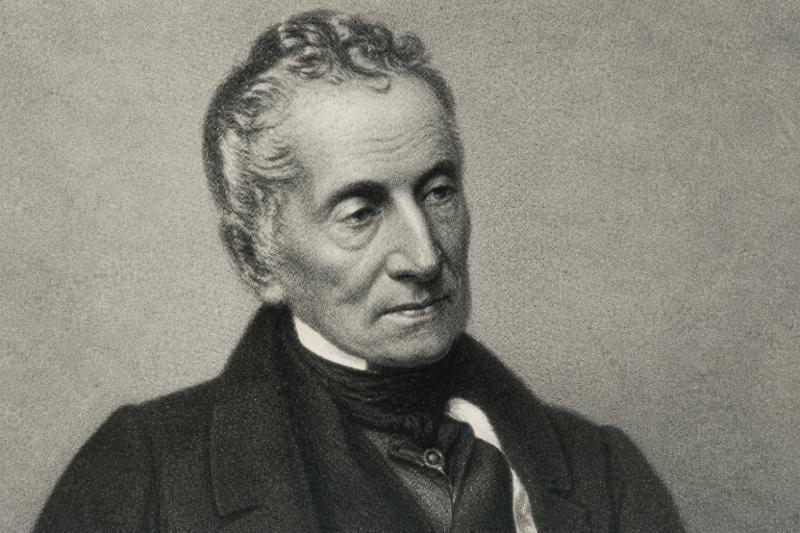
After the victory over Napoleon in 1815, peace did not bring freedom to Europe. Instead, Austrian State Chancellor Klemens Wenzel Lothar von Metternich established a regime of oppression that went down in history as the epitome of reaction. The “Metternich Repression” was not an unplanned act of arbitrary power, but a highly organized, transnational system designed to annihilate liberal and national aspirations in Germany.
The Philosophy of Oppression: Peace as a State Goal
For Metternich, the French Revolution was a “contagious disease” that had plunged the continent into chaos. His goal was the Restoration—the re-establishment of the old monarchical order. To achieve this, he elevated prevention to a principle of government. In this context, security did not mean the protection of the citizen, but the protection of the throne from the citizen.
The Carlsbad Decrees (1819): The Foundation of Persecution
The turning point for repressive policy came with the assassination of writer August von Kotzebue by student Karl Ludwig Sand. Metternich used this event to steer the German Confederation toward a hard line. The resulting Carlsbad Decrees formed the legal backbone of the Metternich Repression:
- University Law: Student fraternities (Burschenschaften) were banned, and state commissioners were installed at every university to monitor professors and students.
- Press Law: Strict prior censorship was introduced for all publications under 20 sheets (approx. 320 pages). This specifically targeted daily political pamphlets and newspapers.
- Investigation Law: The “Central Investigation Commission” was created in Mainz—an early form of political secret police that bundled information on “revolutionary agitation” throughout the Confederation.
Mechanisms of the Metternich Repression
Metternich relied on a combination of technical surveillance, psychological pressure, and legal severity:
- The Black Cabinets: A central pillar of the repression was the violation of postal privacy. In the so-called “Black Cabinets,” letters from opposition members and unsuspecting citizens alike were systematically opened and copied. These early forms of mass surveillance created a climate of general suspicion.
- The Persecution of “Demagogues”: All individuals demanding liberal or national reforms were labeled “demagogues” (agitators). This led to professional bans, where professors lost their chairs (e.g., the Göttingen Seven in 1837), and fortress imprisonment, where critics vanished into dungeons for years without fair trials.
- Censorship as Cultural Paralysis: Because political activity was life-threatening, many Germans retreated into the private sphere—the era of Biedermeier. Authors like Heinrich Heine were forced to encrypt their texts to evade censorship or choose exile. Heine famously described Germany under Metternich as a “winter’s dream” where the spirit of the people was frozen.
- The System of Espionage: Metternich invested enormous sums in a network of informants reaching into the smallest inns and reading societies. This aimed to break social solidarity and isolate the individual.
Resistance and the Collapse of the System
Despite the severity of the repression, the desire for freedom could not be permanently suppressed. The Hambach Festival (1832) proved that the longing for democracy was growing. The system finally collapsed in March 1848. The revolution in Vienna forced the aging State Chancellor to flee—ironically disguised as a woman to escape the wrath of the people. His system crumbled within days, leaving behind a deeply traumatized society.
Conclusion: Why We Remember
At PolitischeVerfolgung.de, we document this chapter because it shows how a state plays security against freedom. The Metternich Repression is a historical lesson on the preemptive security state. It teaches us that censorship, mail surveillance, and the criminalization of political beliefs may provide short-term “calm,” but ultimately undermine a state’s legitimacy. The principles Metternich fought against—freedom of the press, assembly, and academic independence—are today the foundation of our constitutional order.